


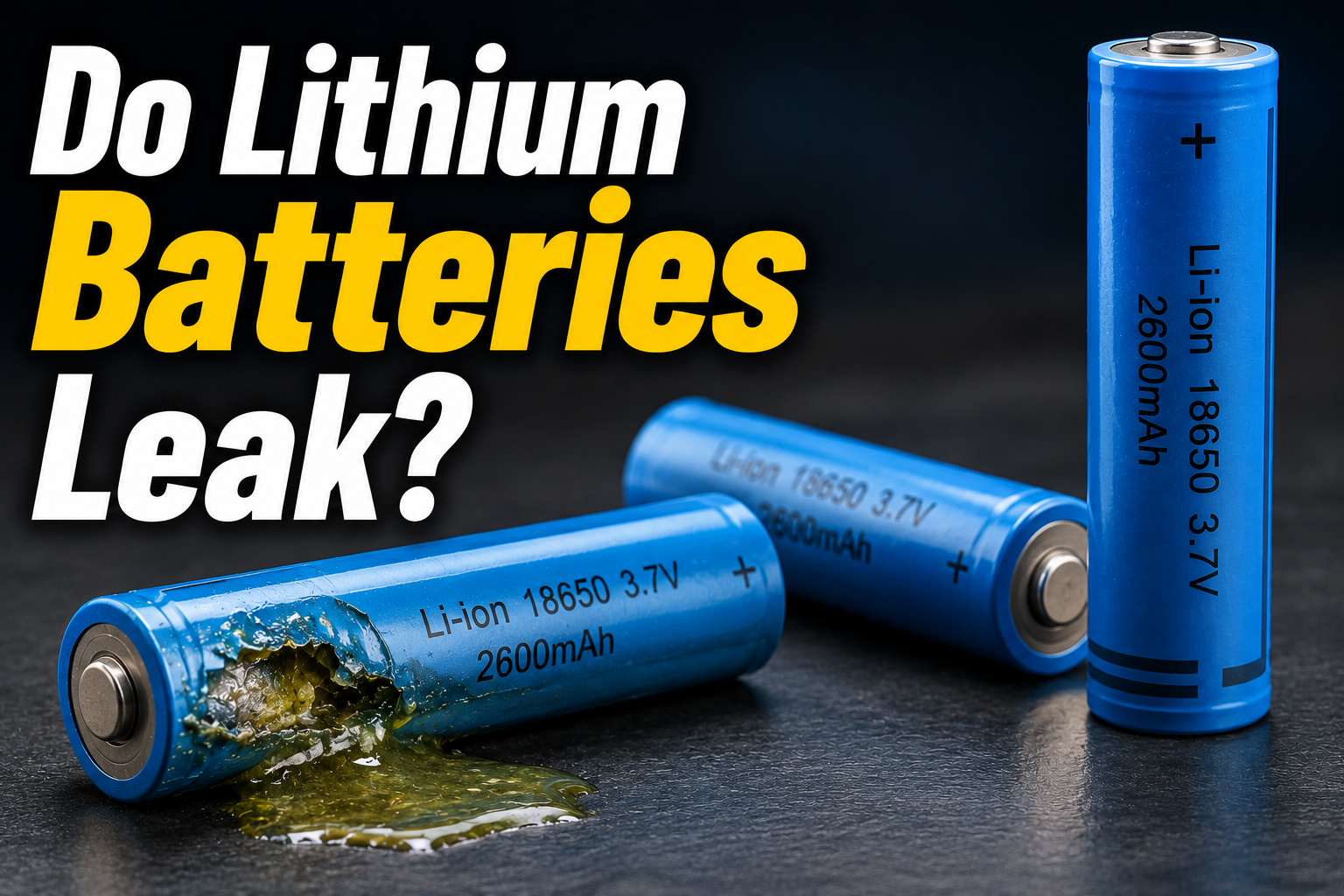
Lithium batteries can leak, but it is rare, and it almost never looks like the crusty white mess you may have seen from an old AA battery. Under normal use, a sealed lithium battery does not leak at all. When a lithium battery does fail, it far more often swells up with gas than leaks liquid.
- Swelling vs leaking: the difference that matters
- What is inside a lithium battery, and is it acid?
- What causes a lithium battery to leak or swell
- How to tell if a lithium battery is leaking or failing
- Is the leaked material dangerous?
- What to do if your lithium battery leaks or swells
- How to dispose of a damaged lithium battery
- How to prevent lithium battery leaks
- Conclusion
- Frequently asked questions
- Related Articles
Leaking happens mainly when the battery is physically damaged, faulty from the factory, overcharged, or exposed to heat. This guide explains what really happens, how to spot a failing battery, and exactly what to do if you find one.
Swelling vs leaking: the difference that matters
The most useful thing to understand up front is that lithium batteries usually swell rather than leak. When something goes wrong inside the cell, gas builds up, and because the battery is sealed, that gas has nowhere to go. The battery puffs up like a small pillow. This is the classic warning sign, and it shows up long before any liquid escapes.
Actual liquid leaking is less common and usually means the casing has been broken, punctured, crushed, or split, or the seal has failed. So if you are picturing a lithium battery weeping fluid the way an old alkaline cell does, that mental image is mostly wrong. The real thing to watch for is a battery or device that is starting to bulge.
Both swelling and leaking mean the same thing for you as the owner: the battery has failed and needs to be handled carefully and replaced. The difference is just in how the failure shows itself.
What is inside a lithium battery, and is it acid?
A lithium battery is not filled with acid. This surprises people, because leaking batteries are so often linked with acid burns. Inside a typical lithium-ion cell you have a positive electrode, a negative electrode, and a liquid electrolyte that carries lithium ions between them. That electrolyte is a solvent-based mixture, not the sulfuric acid of a car battery or the caustic paste of an alkaline cell.
This is a big reason lithium batteries are less prone to the slow, corrosive leaks that plague disposable batteries. Alkaline batteries contain a caustic material that, combined with gas building up as they age, pushes fluid past the seals and leaves that white residue. Lithium chemistry works differently and is sealed more tightly, so simple age-related weeping is uncommon.
That said, the lithium electrolyte is still not something you want on your skin or in your lungs. It is flammable, and if a cell overheats it can give off harmful gas. So while lithium is not acid, a leaking or venting lithium battery is still a real hazard, just a different kind.
| Feature | Lithium (Li-ion / LiPo) | Alkaline (AA, AAA, etc.) |
| Contains acid? | No, a non-acid solvent electrolyte | Yes, a caustic (alkaline) paste |
| Common failure | Swelling and gas build-up | Leaking white crusty fluid |
| How likely to leak | Rare, usually only when damaged | Common as they age or over-discharge |
| Main risk if it fails | Fire, heat, harmful gas | Corrosion, skin and eye irritation |
What causes a lithium battery to leak or swell
Lithium batteries fail for a handful of clear reasons. Almost all of them come down to the cell being pushed outside the conditions it was built for. Knowing the causes is also how you prevent them.
- Physical damage. Dropping, crushing, bending, or puncturing a battery can break the internal separator or the casing. This is the most direct route to a leak, and it can also cause an internal short that leads to heat and swelling.
- Overcharging. Charging a cell beyond its safe voltage breaks down the electrolyte, which creates gas and heat, raises the internal pressure, and leads to swelling and possible rupture. Using the wrong charger is a common cause.
- Heat. High temperatures speed up the chemical reactions inside and can break down the electrolyte and separator. Leaving a battery in a hot car or in direct sun is a classic trigger.
- Age and wear. Over many charge cycles the materials inside degrade and become less stable, so an old, heavily used battery is more likely to swell or fail than a new one.
- Manufacturing defects. A weak seal, contamination, or uneven internal parts from a poor-quality batch can cause a battery to fail early. This is why cheap, uncertified batteries carry more risk.
- Bad storage. Damp conditions, freezing cold, or wild temperature swings all stress the cell and can lead to corrosion or damage that ends in a leak.
How to tell if a lithium battery is leaking or failing
A failing lithium battery usually gives you clear warning signs. Catching them early keeps a minor problem from turning into a fire or a ruined device. Watch for these:
- Swelling or bulging. The battery, or the device around it, looks puffed up. A phone back that lifts away from the frame, a laptop trackpad that feels raised, or a pouch battery that has ballooned are all red flags.
- A soft or spongy feel. Pressing the device, especially over the battery, feels squishy rather than solid.
- A sweet or chemical smell. Escaping electrolyte often has a distinct sweet or solvent-like odor. If you smell it, treat the battery as failed.
- Visible liquid or residue. Any damp film, sticky residue, or corrosion around the battery or its contacts points to a leak.
- Heat, hissing, or a popping sound. A battery that is hot when idle, or that hisses or pops, is actively failing and needs immediate, careful handling.
- The device acts up. Sudden poor performance, a battery that drains fast, or a device that will not hold a charge can hint at internal trouble, though these have other causes too.
Is the leaked material dangerous?
Yes, a leaking or venting lithium battery can be dangerous, and it deserves respect even though it is not acid. There are three things to be careful of.
Skin, eye, and breathing irritation. The electrolyte and any gas it gives off are solvents and salts that can irritate skin, eyes, and airways. Avoid touching the liquid directly, and keep the area well ventilated. In some failures the battery can release hydrogen fluoride gas, which is genuinely harmful to breathe.
Fire and heat. The electrolyte is flammable. A damaged or overheating lithium cell can enter thermal runaway, a self-feeding overheating cycle that can catch fire or, rarely, burst. This is the most serious risk and the reason a swollen battery should never be ignored or reused.
Environmental harm. The materials inside are harmful if they end up in soil or water, which is why a damaged battery must never go in the household trash.
Safety first: never put a lithium battery in water to ‘cool’ it, and never pour water on a burning one in an enclosed space. Lithium reacts with water and can release flammable hydrogen gas. Use sand or a Class D extinguisher, and if a fire grows, get out and call emergency services.
What to do if your lithium battery leaks or swells
If you find a swollen or leaking lithium battery, stay calm and act deliberately. Do not use the device, do not charge it, and do not try to press a bulge back down. Follow these steps.
- Stop using and unplug it. Power the device off if you safely can, and disconnect it from any charger right away. A swollen battery is damaged for good, so there is nothing to save by using it.
- Do not puncture or press it. Never pierce, squeeze, or try to flatten a swollen battery. Breaking the cell can trigger a fire. If it is hot, hissing, or clearly deformed, do not try to remove it at all.
- Protect yourself before handling. If the battery is cool and stable and you must handle it, wear nitrile gloves and eye protection. Avoid touching any leaked liquid directly, and work in a ventilated space, ideally outdoors.
- Move it somewhere safe. Place the battery, or the whole device if you cannot safely remove it, on a non-flammable surface like concrete or metal, away from anything that can burn. A metal container or a box of dry sand works well. Do not seal it in an airtight container.
- Clean a small leak carefully. If a little liquid has escaped onto a surface, wipe it with a dry or lightly damp cloth while gloved, then wash your hands. If liquid touches your skin, rinse with plenty of water; if it gets in your eyes, rinse and seek medical advice.
- Take it for proper disposal. Do not throw it in the trash or the regular recycling. Take it to a battery drop-off or hazardous waste point, covered in the next section.
How to dispose of a damaged lithium battery
A damaged lithium battery is treated as hazardous waste, so it needs proper disposal rather than the bin. Regulators class lithium batteries as universal waste that must be kept separate from household trash, mainly because crushed cells in a garbage truck start fires.
The safe route is a dedicated battery recycling or hazardous waste program. Many communities have drop-off points, and services exist specifically for this. If the battery is stuck inside a device you cannot safely open, most programs will take the whole device. Before drop-off, if the terminals are exposed, cover them with tape to prevent a short, and keep the battery in a non-flammable container until you go.
To find a location near you, a service like Call2Recycle’s drop-off locator lists battery recycling points across the US and Canada. One important note: a battery that is damaged, swollen, or defective usually should not go in a standard store collection box, which is meant for healthy used batteries. Call the recycler’s customer service or your local hazardous waste facility to arrange the right handling for a damaged one, and never place a swollen battery in a supermarket collection box or curbside recycling, where it can start a fire.
How to prevent lithium battery leaks
Most leaks and swelling are preventable, because most causes come down to how the battery is charged, stored, and handled. These habits keep your batteries healthy and safe.
- Use the right charger. Charge with the cable and charger made for the device, or a reputable equivalent, and avoid cheap unbranded chargers that may overcharge the cell.
- Do not leave it charging endlessly or unattended overnight on a bad charger. Quality devices manage this themselves, but a poor charger plus constant top-ups adds stress.
- Keep batteries cool. Store and use them away from heat, direct sun, and hot cars. A cool, dry place is ideal.
- Avoid physical abuse. Do not drop, crush, or bend batteries or the devices holding them, and do not store loose cells with keys or coins that can short them.
- Buy quality, certified batteries. Stick to reputable brands and look for safety certifications. Cheap, uncertified cells are the ones most likely to fail early.
- Replace aging batteries. If a battery is old, holds far less charge than it used to, or has taken a hard knock, replace it before it fails rather than after.
- Store at a partial charge for the long term. If you are putting a lithium battery away for months, a middle charge in a cool spot is kinder to it than full or empty.
Conclusion
So, do lithium batteries leak? They can, but rarely, and usually only after damage, a fault, overcharging, or heat. Far more often a failing lithium battery swells with gas rather than leaking liquid, so a bulging phone, laptop, or pack is your real warning sign.
Lithium electrolyte is not acid, but it is flammable and irritating, so treat any swollen or leaking battery as a hazard: stop using it, keep it away from anything flammable, never use water on it, and take it to proper battery recycling. Charge and store your batteries well, and leaks stay very unlikely.
Frequently asked questions
Do lithium batteries leak like alkaline batteries? No. Alkaline batteries commonly leak a corrosive white fluid as they age. Lithium batteries rarely leak liquid and instead tend to swell with gas when they fail. They also contain no acid, unlike the caustic paste in alkaline cells.
Is a swollen lithium battery dangerous? Yes. Swelling means the cell is damaged and building up gas, which raises the risk of fire or rupture. Stop using the device, do not charge or puncture it, keep it away from flammable material, and recycle it properly.
What should I do if lithium battery fluid touches my skin? Rinse the area with plenty of water. The electrolyte can irritate or burn skin. If it gets in your eyes, rinse thoroughly and seek medical advice. Wear gloves and eye protection whenever you handle a leaking battery.
Can I still use a battery that has swollen or leaked? No. Swelling and leaking are signs of permanent damage. Even if the device still switches on, the battery is unsafe and should be replaced and recycled. Continuing to use it risks fire.
How do I throw away a leaking lithium battery? Not in the trash or curbside recycling. Tape the terminals, keep it in a non-flammable container, and take it to a battery recycling drop-off or hazardous waste point. Many programs accept the whole device if the battery cannot be removed safely.
Related Articles
Do Garage Openers Have Batteries? Full Answer
Does a Wireless Charger Damage Your Battery? What Actually Matters
Does Sentry Mode Drain Battery? What Tesla Owners Should Expect