


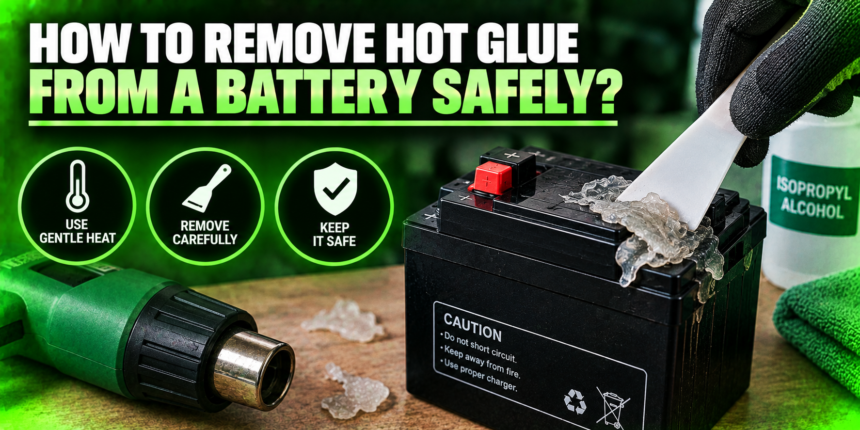
To remove hot glue from a battery, soften the glue first, then lift it off with a plastic tool. Gentle warmth from a hairdryer works for glue sitting on the outside of a sealed pack. For a battery glued into a device, high-strength isopropyl alcohol dissolves the bond without heat. The one rule that matters more than any method: warm or dissolve the glue, and keep heat, metal, and pressure away from the battery cell itself.
- What you need before you start?
- The one rule that keeps you safe
- Method 1: soften and peel with gentle heat
- Method 2: dissolve the bond with isopropyl alcohol
- Which method fits your situation?
- Cleaning up the leftover residue
- When to stop and not touch it?
- Conclusion
- Frequently asked questions
- Can I use a heat gun to remove glue from a lithium battery?
- Will isopropyl alcohol damage my battery?
- What should I not use to remove hot glue from a battery?
- How do I get glue off battery terminals or contacts?
- The battery is swollen. Can I still remove the glue?
- Related Articles
That rule is worth repeating because most batteries you will meet, in a phone, a laptop, a drone, or a power bank, are lithium cells. They react badly to heat and physical damage, so the safe approach is always the gentlest one that gets the job done. The steps below walk through both methods, when to use each, and the signs that mean you should stop and not touch the battery at all.
What you need before you start?
You do not need much, and the cheap plastic tools are the important ones. Gather these before you begin:
- A plastic scraper, an old guitar pick, or a plastic spudger. Never a knife or metal blade.
- A hairdryer, or a heat gun only if it has a low setting you can control.
- High-strength isopropyl alcohol, 90 percent or higher if you can get it.
- A cotton swab or lint-free cloth for cleanup.
- Gloves and eye protection, plus a clear, non-flammable surface to work on.
Where possible, disconnect the battery from any power first, and unplug the device. Take a quick photo of how everything sits before you start, so you know where wires and connectors go back.
The one rule that keeps you safe
Heat the glue, not the battery. Hot glue is a thermoplastic, which means it goes soft when it warms up and firm again as it cools. That is helpful, because a little warmth loosens its grip. The catch is that a lithium battery cell also reacts to heat, and not in a good way.
Aim any warmth at the glue line and keep it well away from the cell. Move the heat around instead of parking it in one spot. If the battery ever feels more than mildly warm to the touch, stop and let it cool. The same logic rules out metal tools: a slip with a blade can nick the casing, and a punctured lithium cell can short, release toxic contents, or catch fire.
Quick check: if you cannot heat or pry the glue without also heating or pressing the battery, switch to the alcohol method instead. It is slower but far safer.
Method 1: soften and peel with gentle heat
This is the method for glue sitting on the outside of a battery or a sealed pack, where the cell is protected inside a shell and your heat and tools never reach it. Think glue blobs on a project, on a holder, or on the plastic wrap of a pack.
- Set your hairdryer to low or medium warm, or a heat gun to its lowest setting. Hold it about six inches (15 cm) from the glue.
- Warm the glue in short passes, moving back and forth for around 30 seconds at a time. You are looking for the glue to turn soft and slightly clear, not to melt into a puddle.
- As soon as it softens, slide the edge of your plastic tool under one corner and lift gently. Work along the seam, not straight down onto the surface.
- If the glue firms up again before it is off, give it another short warm pass and continue. Patience beats force here.
- Once the bulk is off, move on to cleaning up the thin residue (covered further down).
Keep checking the temperature of the battery as you go. Warm glue is the goal; a warm battery is the signal to pause. If the glue is stubborn, it is safer to switch to alcohol than to crank up the heat.
A couple of things make this easier. Older, thinner glue lifts with very little warmth, while a thick blob needs a few more passes to soften all the way through. Work on one section at a time rather than trying to heat the whole area at once. And if a small tail of glue snaps off and stays stuck, do not chase it with the tool. A dab of alcohol on that spot lifts it in a few seconds without any prying.
Method 2: dissolve the bond with isopropyl alcohol
Use this method when the battery is glued into a device, when it is a bare lithium pouch, or any time heat feels risky. Isopropyl alcohol seeps into the bond and loosens the adhesive’s grip on the surface, so you can lift the battery with almost no prying. This is the approach repair guides lean on, and the free teardown guides at iFixit are a good place to find the exact steps for your specific phone or laptop model.
- Power everything down and disconnect the battery connector if you can reach it.
- Drip a small amount of high-strength isopropyl alcohol along the edge where the glue meets the surface. Use it sparingly, since it is flammable.
- Give it a minute to work its way under the adhesive. You will feel the bond start to give.
- Slide a plastic card or pick under the loosened edge and lift slowly and evenly. Add a few more drops of alcohol wherever it still holds, rather than forcing it.
- Keep the pressure spread out. For a taped or glued pouch, work the card in from the edges, never straight under the middle.
Acetone dissolves glue too, but it can damage or cloud plastic parts and is harsher on hands and fumes. Reach for isopropyl alcohol first, and only use acetone on bare, non-plastic surfaces.
One firm safety line: never use water to loosen glue on a lithium battery. Lithium can react with water, and that is a risk not worth taking. Alcohol evaporates cleanly and does not carry the same danger.
Which method fits your situation?
The right choice depends on the battery and how bad the glue is. Here is the short version:
| Situation | Best method | Avoid |
| Glue on the outside of a sealed cell or pack | Warm gently with a hairdryer, then peel with a plastic tool; wipe residue with isopropyl alcohol | Metal blades, scraping hard, direct flame |
| Glue holding a battery into a phone or laptop | High-strength isopropyl alcohol (90%+) worked under the edges to dissolve the bond | Heat guns and prying against the cell |
| Glue on RC or drone li-po packs | Plastic pick plus a little alcohol; lift slowly and evenly | Bending, creasing, or squeezing the pouch |
| Battery is swollen, dented, or punctured | Stop. Do not remove the glue yourself; isolate the battery and recycle it | Any heat, pressure, or metal contact at all |
The bottom row is the one to take seriously. If the battery shows any swelling, a dent, or a puncture, the job changes completely, and there is a section on that below.
Cleaning up the leftover residue
Once the main glue is off, a thin sticky film usually stays behind. This part is easy. Dab a cotton swab or cloth with a little isopropyl alcohol and rub the residue gently until it lifts. Alcohol breaks down the last of the adhesive and dries without leaving a mark.
Go light near contacts and battery terminals. You want them clean and dry, with no film that could interfere with a connection. Let everything air out for a minute before you reconnect or reassemble, so no damp alcohol is trapped inside.
When to stop and not touch it?
Some batteries should not be worked on at all. If the cell looks puffed up, feels spongy, or has a dent or a hole, stop right there. Swelling means gas has built up inside, and that battery is already unstable. Trying to peel glue off it, especially with heat or a tool, can trigger a fire or release harmful contents.
In that case, leave the glue where it is. Power the device down, keep it away from anything flammable, and take the battery to a proper recycling or hazardous-waste drop-off. Batteries are hazardous waste and do not belong in household trash. If a battery ever starts to hiss, smoke, or heat up quickly, move away from it and treat it as an emergency.
The same caution applies if the battery is buried deep in a device and you cannot reach the glue without forcing parts or bending the cell. A repair shop has the right tools and can do it safely. There is no prize for pushing through a job that has turned risky.
It also helps to know what kind of cell you are dealing with. A soft pouch pack, common in phones, drones, and slim gadgets, is the most fragile and the least forgiving of heat or pressure. A cell wrapped in a hard metal can, like an 18650, is sturdier but still deserves the same gentle treatment. When in doubt, assume it is lithium and pick the safest method. Most recycling programs and many hardware stores now take old batteries for free, so safe disposal is rarely more than a short trip away.
Conclusion
Removing hot glue from a battery comes down to softening the glue and keeping every bit of heat, metal, and pressure away from the cell. Use gentle warmth for glue on the outside of a sealed pack, and isopropyl alcohol for anything glued into a device or on a bare lithium cell.
Lift with plastic tools, clean the residue with a dab of alcohol, and stop immediately if the battery looks swollen or damaged. Done gently, it is a simple fix. A good result is clean glue removal and a battery that is untouched and safe.
Frequently asked questions
Can I use a heat gun to remove glue from a lithium battery?
Only with great care, and only on glue sitting on the outside of a sealed pack. Keep the heat on the glue, never on the cell, and stop if the battery warms up. For a battery glued into a device, skip heat and use isopropyl alcohol instead.
Will isopropyl alcohol damage my battery?
No, when used sparingly it is safe and evaporates cleanly. It loosens the adhesive without heat or force, which is why repair guides rely on it. Use a high strength, 90 percent or more, and let the area dry before reassembling.
What should I not use to remove hot glue from a battery?
Skip metal tools, water, and direct flame. Metal can puncture the cell, water can react dangerously with lithium, and open flame is an obvious fire risk. Plastic tools plus alcohol or gentle warmth are all you need.
How do I get glue off battery terminals or contacts?
Dab a cotton swab with isopropyl alcohol and rub the contacts gently until the film lifts, then let them dry fully. Clean, dry terminals matter for a good connection, so avoid leaving any sticky residue behind.
The battery is swollen. Can I still remove the glue?
No. A swollen battery is unstable and should not be pried, heated, or handled more than necessary. Leave the glue alone, keep the battery away from anything flammable, and take it to a battery recycling or hazardous-waste drop-off.
Related Articles
How to Replace a Subaru Key Fob Battery?
How to Test an Automotive Battery?
How to Tighten a Battery Terminal? (The Right Way)