


Batteries seem like a simple purchase until you actually need one to work reliably, whether that is during a power outage, inside your child’s favorite toy, or powering a wireless mouse you use every day. The truth is that battery performance can vary quite a bit depending on the device you are using it in, how it is stored, and even the climate you live in.
This article walks through the history of both companies, how batteries actually function, and a side-by-side look at performance in different situations. If you only have thirty seconds, here is the short version: Duracell tends to perform a little better in high-drain gadgets like digital cameras and gaming controllers, while Energizer often lasts slightly longer in low-drain items like TV remotes and wall clocks, and also tends to hold its charge better during long-term storage. For everyday household use, most people will not notice a meaningful difference between the two.
Company Background
Understanding where these brands came from helps explain why they are often neck and neck in quality.
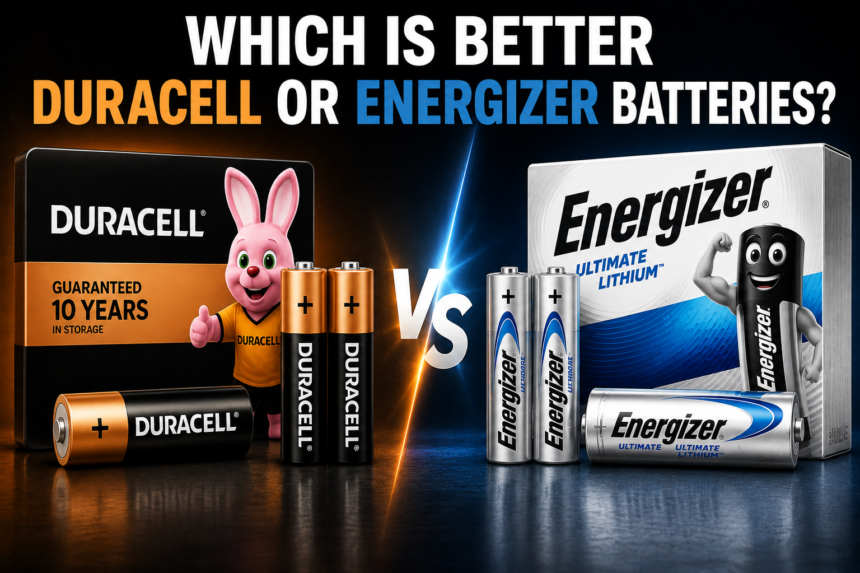
Duracell was founded in the United States and built its early reputation on alkaline battery technology in the 1960s. It grew into one of the most recognized names in portable power, and today it operates under Berkshire Hathaway, having been acquired from Procter & Gamble in 2016. Its long-running “Copper Top” design and the well-known Duracell Bunny mascot have made it a familiar sight on store shelves for decades.
Energizer has an equally long history, tracing its roots back to the Eveready Battery Company, one of the oldest battery manufacturers in the world. Energizer became its own independent brand in the 1980s and is famous for the Energizer Bunny, a marketing icon that has become part of pop culture. The company now operates as Energizer Holdings and owns several other well-known brands in the power and lighting space.
Both companies manufacture batteries across the globe and are considered premium, trusted names, which is part of why the comparison is so close.
How Batteries Work?
Before comparing performance, it helps to understand a little bit about what is actually happening inside a battery.
A standard alkaline battery, which is what most Duracell and Energizer AA and AAA batteries are, stores energy through a chemical reaction between zinc and manganese dioxide, with an alkaline electrolyte (usually potassium hydroxide) enabling the flow of electrons. As the battery is used, this chemical reaction gradually depletes, which is why batteries eventually die even if you are not using the device constantly.
Two concepts matter most when comparing brands:
- Drain rate: This refers to how quickly a device pulls energy from the battery. A digital camera or a remote-control car is considered a high-drain device because it demands bursts of power quickly. A TV remote or a wall clock is a low-drain device because it sips power slowly and steadily over a long period.
- Shelf life: This is how long a battery can sit unused in a drawer before it starts to lose its charge. Most modern alkaline batteries from either brand claim a shelf life of around 10 to 12 years, though real-world results vary.
Keeping these two ideas in mind makes it much easier to understand why one brand might “win” in one situation and lose in another.
Performance Comparison
This is the heart of the debate, so let’s look at it closely.
Heavy-Drain Devices
In devices that need quick bursts of power, such as digital cameras, wireless gaming controllers, or motorized toys, Duracell has historically shown a slight edge in independent testing. Its Coppertop and Optimum lines are engineered with high-drain performance in mind, often lasting a little longer before the device signals a low battery.
Low-Drain Devices
For items that draw power slowly and steadily, like television remotes, wall clocks, or smoke detectors, Energizer’s Max line tends to perform marginally better over the long run. The difference is small, often just a matter of a few extra days or weeks of use, but it is consistent across multiple test cycles.
Cold Weather Performance
Both brands make cold-resistant lithium batteries designed for extreme temperatures, which are popular for outdoor equipment, trail cameras, and emergency kits. Energizer’s Ultimate Lithium line is particularly well regarded for performing reliably in freezing conditions, and it is often the go-to recommendation for winter camping or emergency preparedness kits.
Shelf Life and Storage
If you buy batteries in bulk and store them for emergencies, Energizer batteries are frequently reported to retain their charge slightly longer while sitting unused, which matters if you are stocking a first aid kit or an emergency drawer you rarely touch.
Here is a simplified comparison table to summarize this section:
| Category | Duracell | Energizer |
|---|---|---|
| High-drain devices (cameras, controllers) | Slight advantage | Close second |
| Low-drain devices (remotes, clocks) | Close second | Slight advantage |
| Cold weather performance | Good | Slightly better (Ultimate Lithium) |
| Long-term storage life | Good | Slightly better |
| Leak resistance | Very good | Very good |
Battery Types Offered
Both brands offer a wide product range beyond the basic AA and AAA batteries most people are familiar with.
Duracell’s lineup includes its standard Coppertop alkaline batteries, the higher-performance Optimum line, rechargeable Ion Core batteries, specialty batteries for hearing aids and watches, and 9V and lithium options for smoke detectors and specialty electronics.
Energizer offers a similarly broad range, including its Max alkaline line, the cold-weather-focused Ultimate Lithium batteries, Energizer Recharge rechargeable batteries, and a variety of button-cell and specialty batteries for hearing aids, watches, and medical devices.
If you need rechargeable batteries specifically, both brands’ rechargeable lines are considered comparable in cycle life, though Energizer’s Recharge line has a slightly longer track record among some reviewers.
Price and Value
Pricing between the two brands is typically very close, with occasional sales or bulk-pack deals shifting the value proposition one way or another depending on the retailer.
When you break it down to cost per use, meaning the price divided by roughly how long each battery lasts in a given device, the two brands usually land within a few cents of each other. Store brands and off-brand batteries are almost always cheaper upfront, but tend to underperform both Duracell and Energizer in longevity, which is why many households consider the name-brand premium worth paying for devices that matter, like security cameras or medical equipment.
Buying in bulk multi-packs is generally the best way to save money with either brand, especially for households that go through a lot of batteries for toys, remotes, and small electronics.
Leakage and Reliability
One of the biggest fears people have with batteries is leakage, which can damage the devices they are inserted into. Both Duracell and Energizer have made major improvements in leak-resistant technology over the years and both currently offer guarantees that promise to replace a damaged device if it is proven that their battery caused the leak.
Real-world complaints about leakage exist for both brands, though they are relatively rare compared to older battery technology from decades past. The general advice that applies to any battery brand still holds true: remove batteries from devices you do not plan to use for a long time, and avoid storing them in devices that will sit unused for months, since even leak-resistant batteries can eventually fail if left in place indefinitely.
Environmental Impact
Both companies have made public commitments to sustainability and offer some form of battery recycling program, either through partnerships with recycling organizations or drop-off programs at participating retailers.
Modern batteries from both Duracell and Energizer are mercury-free, which was an important shift in the battery industry starting in the 1990s. Energizer has been especially vocal about its sustainability goals, including reducing plastic packaging and increasing the use of recycled materials in its batteries. Duracell has similarly invested in reducing its environmental footprint, though the two companies’ public sustainability reporting differs in scope and detail.
If recycling matters to you, it is worth checking your local municipality’s guidelines, since battery recycling rules vary by location regardless of which brand you choose.
Independent Test Results
Consumer testing organizations have compared these two brands for years, and results tend to fluctuate slightly from test to test depending on the specific product line and device used. In general, most independent lab tests find the two brands to be extremely close in overall performance, often within a few percentage points of each other across different categories.
User reviews on major retail platforms and online communities echo this sentiment. Most reviewers report being satisfied with either brand, and complaints tend to be brand-agnostic, focusing more on specific batches or storage conditions rather than a clear, consistent difference in quality between the two companies.
Best Use Cases
To make this practical, here is a breakdown of which brand might suit specific situations best:
- Digital cameras and gaming controllers: Duracell tends to have a slight edge for devices that need quick, high-power bursts.
- Remotes, clocks, and smoke detectors: Energizer often lasts marginally longer in these steady, low-drain devices.
- Emergency kits and cold climates: Energizer’s Ultimate Lithium line is a popular choice for reliability in freezing temperatures.
- Everyday household mixed use: Either brand works well, and the difference will likely be unnoticeable in daily life.
- Budget-conscious bulk buying: Compare current sale prices, since both brands regularly offer competitive multi-pack deals.
Final Verdict
So, which is better, Duracell or Energizer batteries? The honest answer is that there is no universal winner. Duracell has a small advantage in high-drain electronics, while Energizer edges ahead in low-drain devices, cold weather performance, and long-term shelf storage. For the average household, the difference between the two brands is small enough that personal preference, current pricing, and store availability are perfectly reasonable factors to base your decision on.
If you want a simple rule of thumb: choose Duracell for power-hungry gadgets like cameras and controllers, and choose Energizer for slow-draining devices, emergency kits, and cold-weather use.
Frequently Asked Questions
Do batteries expire? Yes, batteries have a shelf life, typically around 10 to 12 years for modern alkaline batteries from either brand, though they gradually lose a small amount of charge even while unused.
Can you mix Duracell and Energizer batteries in the same device? It is generally not recommended to mix batteries from different brands, or even batteries of different ages, in the same device, since it can cause uneven power delivery and, in rare cases, leakage.
Which brand is safer in terms of leakage? Both brands have made significant advancements in leak-resistant technology and offer similar reliability. Leakage incidents are rare with either brand when batteries are stored and used properly.
Are rechargeable batteries from either brand worth it? Yes, for devices used frequently, rechargeable batteries from either Duracell or Energizer can save money over time and reduce battery waste, though they typically have a lower initial voltage than alkaline batteries.
Is one brand significantly cheaper than the other? Not usually. Pricing is often very close, and the better deal frequently comes down to current sales, bulk pack sizes, or store-specific promotions rather than a consistent price difference between the brands.
Related Articles
How Long Do Ring Camera Batteries Last? Full Guide
Does Low Battery Mode Charge Slower? The Real Answer Explained