


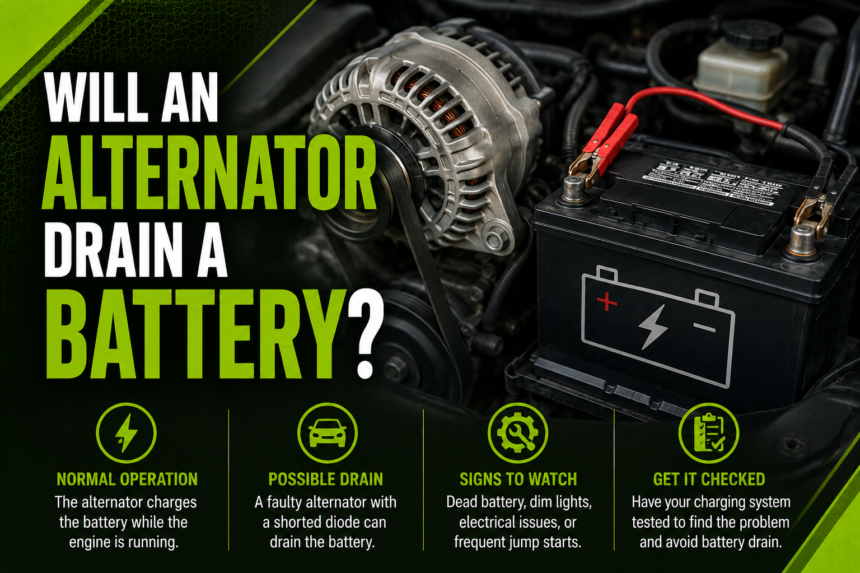
Many car owners assume the alternator is only responsible for charging the battery, so the idea that it could drain the battery instead sounds confusing at first. In reality, a healthy alternator never drains a battery because its entire job is to keep the battery topped up while the engine runs.
- What Is an Alternator and Its Role in a Vehicle
- How an Alternator Works
- Basic Function: Converting Mechanical Energy to Electrical Energy
- Relationship Between Alternator, Battery, and Electrical System
- The Charging Cycle While Engine Is Running
- Can a Healthy Alternator Drain a Battery?
- How a Faulty Alternator Can Drain a Battery
- Faulty Diodes Causing Reverse Current Flow
- Worn-Out Brushes Reducing Charging Efficiency
- Failing Voltage Regulator Issues
- Damaged Stator or Rotor Windings
- Signs of a Bad Alternator Draining Your Battery
- Dashboard Warning Lights
- Dimming or Flickering Headlights
- Frequent Battery Dying, Especially Overnight
- Strange Noises from the Alternator
- Battery Warning Smells
- Other Causes of Battery Drain Not Alternator-Related
- Parasitic Drain from Electronics
- Old or Weak Battery
- Corroded Battery Terminals
- Faulty Wiring or Short Circuits
- How to Test If Your Alternator Is Draining the Battery
- Multimeter Voltage Test
- Visual Inspection of Belts and Connections
- Professional Diagnostic Testing
- DIY Methods vs When to See a Mechanic
- How to Fix or Prevent Alternator-Related Battery Drain
- Repairing vs Replacing the Alternator
- Regular Maintenance Tips
- When to Replace the Battery Alongside the Alternator
- Cost of Alternator Repair or Replacement
- Conclusion
- Frequently Asked Questions
- Can a bad alternator kill a new battery?
- How long can you drive with a failing alternator?
- Does disconnecting the battery stop alternator drain?
- Is it cheaper to fix or replace an alternator?
- Related Articles
However, once an alternator develops internal faults such as damaged diodes, worn brushes, or a failing voltage regulator, it can pull power from the battery instead of supplying it, leading to a dead battery even after a full charge.
Understanding this difference helps you correctly identify whether your battery problems are coming from the alternator or from something else entirely in your vehicle’s electrical system.
What Is an Alternator and Its Role in a Vehicle
An alternator is a small generator mounted near the engine that converts mechanical energy from the engine’s rotation into electrical energy.
This electrical energy powers everything from headlights to the radio while also recharging the battery as you drive, making it one of the most important components in your car’s charging system.
Common Myth: Alternators Only Charge, Never Drain
A widely repeated belief is that alternators are one-directional devices that can never take energy away from the battery. This is true for a properly functioning alternator, but it overlooks the fact that internal component failure can reverse this relationship.
When parts like diodes wear out, the alternator can allow current to flow backward into itself, quietly draining the battery overnight or whenever the car sits parked.

Why This Question Matters to Car Owners
Drivers often replace their battery multiple times without realizing the real problem lies in the alternator, wasting money and time. Knowing whether an alternator can drain a battery helps you diagnose the actual root cause faster, saving you from repeated breakdowns and unnecessary part replacements.
This knowledge also helps you recognize early warning signs before you get stranded with a completely dead battery.
How an Alternator Works
The alternator spins along with the engine using a serpentine belt, and this rotation generates alternating current that gets converted into direct current for the car’s electrical system. This direct current then flows to the battery and every electrical component simultaneously while the engine is running.
Basic Function: Converting Mechanical Energy to Electrical Energy
Inside the alternator, a rotor spins within a stator, creating a changing magnetic field that induces electrical current in the copper windings.
This current then passes through a rectifier, which contains diodes that convert the alternating current into the direct current your car’s battery and electronics actually use.
Relationship Between Alternator, Battery, and Electrical System
The battery and alternator work as a team, where the battery provides the initial power to start the engine, and the alternator takes over once the engine is running to supply continuous power.
If either component fails to do its job properly, the entire electrical system becomes unstable, causing dimming lights, electronic glitches, or a complete failure to start.
The Charging Cycle While Engine Is Running
Once the engine starts, the alternator immediately begins recharging the battery to replace the energy used during ignition.
This charging cycle continues throughout the drive, and the voltage regulator ensures the battery receives a steady, safe amount of voltage without overcharging or undercharging it.
Can a Healthy Alternator Drain a Battery?
A fully functional alternator cannot and does not drain a battery under normal circumstances. Its internal diodes are specifically designed to allow current to flow in only one direction, from the alternator to the battery, which naturally prevents any reverse drain from occurring.
Why a Properly Functioning Alternator Should Not Drain the Battery
The rectifier diodes inside a healthy alternator act like one-way valves for electricity, blocking any backward flow of current toward the alternator itself.
As long as these diodes remain intact and the voltage regulator is working correctly, the battery will only receive power and never lose it back through the alternator.
Normal Current Flow Direction
In a properly working system, current always flows from the alternator into the battery and electrical system while the engine runs, and it flows from the battery to the starter only during ignition. This one-directional flow is what keeps the battery charged and the entire system stable during normal driving conditions.
How a Faulty Alternator Can Drain a Battery
When internal alternator components fail, the direction of current flow can reverse, pulling stored energy out of the battery instead of adding to it. This is the core answer to whether an alternator can drain a battery, and it usually stems from one of several specific mechanical or electrical faults.
Faulty Diodes Causing Reverse Current Flow
When one or more diodes inside the rectifier become damaged or short-circuited, they lose their ability to block reverse current flow.
This allows electricity to flow backward from the battery into the alternator even when the engine is off, slowly draining the battery overnight.
Worn-Out Brushes Reducing Charging Efficiency
Brushes inside the alternator maintain contact with the rotating rotor to transfer electrical current, but they wear down gradually with use.
Once these brushes become too thin or damaged, the alternator cannot generate sufficient charging voltage, leaving the battery undercharged and eventually drained.
Failing Voltage Regulator Issues
The voltage regulator controls how much electrical output the alternator sends to the battery, preventing both overcharging and undercharging.
A failing regulator can send inconsistent or excessive voltage, damaging the battery over time or failing to charge it properly, which mimics the symptoms of a direct drain.
Damaged Stator or Rotor Windings
The stator and rotor contain tightly wound copper coils that generate electrical current through magnetic induction. If these windings become damaged, shorted, or corroded, the alternator’s charging output drops significantly, and in severe cases, it can create a path for current to leak back into the battery.
Signs of a Bad Alternator Draining Your Battery
Recognizing the early symptoms of alternator failure can help you address the issue before it leaves you stranded with a dead battery. These signs often appear gradually, giving you a window of opportunity to get the alternator inspected and repaired.
Dashboard Warning Lights
Most modern vehicles have a battery-shaped warning light on the dashboard that illuminates when the charging system detects irregular voltage. This light, along with an occasional check engine light, is often the earliest indicator that your alternator is not functioning correctly.
Dimming or Flickering Headlights
Headlights that dim noticeably at idle or flicker while driving suggest the alternator is struggling to maintain consistent voltage output. This inconsistency often points to worn brushes or a failing voltage regulator inside the alternator.
Frequent Battery Dying, Especially Overnight
If your battery repeatedly dies overnight even after being fully charged during the day, this is one of the strongest indicators of a faulty alternator drawing power in reverse. This pattern is different from a simple weak battery, which typically drains gradually over several days rather than overnight.
Strange Noises from the Alternator
A grinding, whining, or squealing noise coming from the alternator area often signals worn bearings or a failing internal component. These noises usually get louder as the engine speed increases and should not be ignored.
Battery Warning Smells
A burning rubber or hot electrical smell near the engine bay can indicate the alternator belt is slipping or that internal components are overheating due to electrical faults. This smell often accompanies visible smoke in more severe cases and requires immediate attention.
Other Causes of Battery Drain Not Alternator-Related
Not every battery drain issue traces back to the alternator, so it’s important to rule out other common culprits before assuming the alternator is at fault. Several everyday factors can drain a battery just as effectively as a faulty alternator.
Parasitic Drain from Electronics
Leaving interior lights, phone chargers, or aftermarket accessories plugged in can slowly drain the battery even when the car is off. This parasitic drain is one of the most common non-alternator causes of a dead battery.
Old or Weak Battery
Batteries naturally lose their ability to hold a charge as they age, typically after three to five years of regular use. An old battery may drain quickly regardless of how well the alternator is charging it.
Corroded Battery Terminals
Corrosion buildup on battery terminals creates resistance that interferes with proper charging and power delivery. This corrosion often appears as a white or greenish crust and can be cleaned to restore proper connection.
Faulty Wiring or Short Circuits
Damaged wiring or a short circuit somewhere in the vehicle’s electrical system can create an unintended path for current to escape, draining the battery even with a perfectly functioning alternator. These issues often require professional diagnostic equipment to locate accurately.
How to Test If Your Alternator Is Draining the Battery
Testing your alternator doesn’t require advanced tools, and most car owners can perform a basic check at home before visiting a mechanic. This process helps confirm whether the alternator is truly the source of your battery problems.
Multimeter Voltage Test
Using a multimeter, you can check the battery voltage with the engine off, which should read around 12.6 volts for a fully charged battery. With the engine running, the voltage should rise to between 13.5 and 14.5 volts, and a reading outside this range strongly suggests alternator trouble.
Visual Inspection of Belts and Connections
A quick visual check of the serpentine belt and alternator wiring connections can reveal obvious problems like a loose, cracked, or missing belt. Loose or corroded connections at the alternator terminals can also cause charging issues that mimic a drained battery.
Professional Diagnostic Testing
If home testing doesn’t give a clear answer, most auto parts stores and mechanics offer free or low-cost alternator and battery testing using specialized diagnostic equipment. This testing provides a more accurate reading of the alternator’s output and can detect issues that a basic multimeter might miss.
DIY Methods vs When to See a Mechanic
While basic voltage testing is safe for most car owners to attempt, any signs of unusual noises, smells, or repeated failures should prompt a visit to a professional mechanic. Attempting to repair internal alternator components without proper training can lead to further damage or safety hazards.
How to Fix or Prevent Alternator-Related Battery Drain
Once you’ve confirmed the alternator is causing the drain, addressing it quickly prevents further strain on your battery and other electrical components. Both repair and preventive maintenance play a role in keeping your charging system healthy.
Repairing vs Replacing the Alternator
In some cases, a mechanic can repair the alternator by replacing worn brushes, damaged diodes, or a faulty voltage regulator individually. However, if the damage is extensive or the alternator is old, a full replacement is often more cost-effective and reliable in the long run.
Regular Maintenance Tips
Routine inspection of the serpentine belt, battery terminals, and charging voltage during regular service appointments can catch alternator problems early. Keeping connections clean and tight also helps the entire charging system function more efficiently over time.
When to Replace the Battery Alongside the Alternator
If your battery has been repeatedly drained by a failing alternator, it may have sustained permanent damage and lost some of its capacity to hold a charge. In such cases, replacing both the alternator and the battery together ensures your vehicle starts reliably going forward.
Cost of Alternator Repair or Replacement
Understanding the typical cost range helps you budget appropriately and avoid overpaying for alternator-related repairs. Prices can vary significantly based on your vehicle and where you get the work done.
| Service Type | Estimated Cost Range |
| Alternator diagnostic test | Free to $50 |
| Alternator repair (brushes, diodes) | $100 to $250 |
| Full alternator replacement (parts + labor) | $300 to $700 |
| Battery replacement | $100 to $250 |
| Combined alternator and battery replacement | $400 to $900 |
Average Cost Range
Most standard alternator replacements fall between $300 and $700 depending on the vehicle make and model. Luxury or specialty vehicles often cost more due to pricier parts and more complex labor requirements.
Factors Affecting Price
The final cost depends on factors like vehicle type, whether you choose OEM or aftermarket parts, and local labor rates in your area. Choosing a reputable repair shop and comparing quotes can help you find a fair price without sacrificing quality.
Conclusion
To directly answer whether an alternator can drain a battery, a properly working alternator will never do so, but a faulty one absolutely can. Recognizing the signs early, testing correctly, and addressing repairs promptly will protect both your battery and your vehicle’s overall electrical health.
Frequently Asked Questions
Can a bad alternator kill a new battery?
Yes, a faulty alternator can send inconsistent voltage or draw reverse current that damages even a brand-new battery over time.
How long can you drive with a failing alternator?
It depends on the severity of the fault, but most vehicles can run for a short distance, typically twenty-five to fifty miles, before the battery fully depletes.
Does disconnecting the battery stop alternator drain?
Disconnecting the battery stops the drain temporarily, but the underlying alternator fault will remain and needs proper repair.
Is it cheaper to fix or replace an alternator?
Minor repairs like brush replacement are cheaper, but full replacement is often more reliable for alternators with extensive internal damage.
Related Articles
How Long Does a Battery Take to Charge? Complete 2026 Guide
How to Replace a Garage Door Remote Battery – Easy Step-by-Step Guide
Honda Battery Warranty Guide 2026: Coverage, Terms & Claim Process
What 12V 10Ah Battery Replaces Honda Motorsport Battery GTX1? Full Replacement Guide