


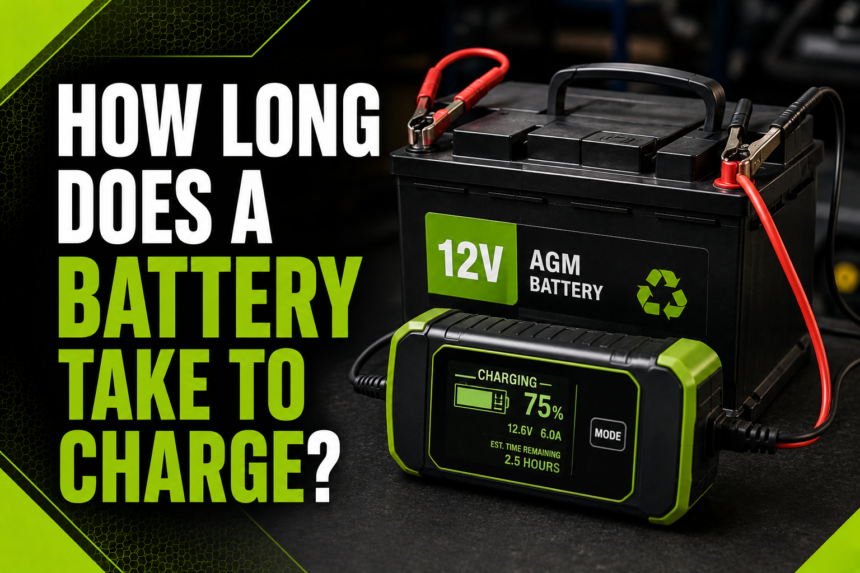
Charging time is one of the most common questions people ask about their everyday devices, and the honest answer is that it depends on several factors working together. On average, a smartphone takes between thirty minutes and three hours, a laptop takes one to three hours, and an electric vehicle can take anywhere from thirty minutes to twelve hours depending on the charger used.
- Factors That Affect Battery Charging Time
- Battery Capacity
- Charger Output
- Battery Chemistry
- Battery Age and Health
- Charging Method
- Temperature and Environment
- Device Usage While Charging
- Charging Times by Device Type
- Smartphones
- Laptops and Tablets
- Smartwatches and Wearables
- Bluetooth Earbuds
- Rechargeable AA and AAA Batteries
- Power Banks
- Car Batteries
- Electric Vehicles
- Power Tools
- Battery Chemistry Comparison
- Fast Charging vs Standard Charging
- How to Calculate Charging Time Yourself
- Tips to Charge Batteries Faster and Safer
- Common Myths About Battery Charging
- How to Extend Battery Lifespan
- Frequently Asked Questions
- How long does it take to charge a phone from 0 to 100 percent?
- Is it bad to charge your phone overnight?
- Why is my battery charging slowly?
- Does charging time affect battery lifespan?
- How long do electric vehicle batteries take to charge?
- Conclusion
- Related Articles
The exact number changes based on battery capacity, charger power, battery chemistry, and even the temperature of the room you are charging in. This guide breaks down every variable so you can understand exactly what determines charging speed for your specific device.
Factors That Affect Battery Charging Time
Several elements combine to decide how quickly a battery fills up, and none of them work in isolation. Understanding these factors makes it much easier to predict charging time for any device you own, rather than relying on guesswork or generic averages.
Battery Capacity
The capacity of a battery, measured in milliampere-hours or ampere-hours, tells you how much energy it can store. A larger capacity battery naturally takes longer to charge than a smaller one, assuming the same charger is used for both.
This is simply because there is more energy that needs to be transferred into the cells before the battery reaches one hundred percent.
Charger Output
The wattage or amperage of the charger plays an equally important role in determining speed. A charger that delivers more power can push energy into the battery faster, which is why fast chargers exist for phones, laptops, and electric vehicles. Using a low-output charger on a device designed for fast charging will always result in a much slower session.
Battery Chemistry
Different battery types charge at different rates because of how their internal chemistry reacts to incoming current.
Lithium-ion batteries generally charge faster and more efficiently than older nickel-based or lead-acid batteries. This difference in chemistry is one of the biggest reasons why a car battery takes so much longer than a phone battery.
Battery Age and Health
Older batteries often charge more slowly because their internal resistance increases over time, making it harder for current to flow efficiently.
A battery that has gone through hundreds of charge cycles will rarely charge as quickly as it did when it was brand new. This gradual slowdown is a normal part of battery aging rather than a sign of malfunction.
Charging Method
Wired charging is almost always faster than wireless charging because wireless methods lose some energy during transfer between the coils. Fast charging technologies, when supported by both the charger and the device, can dramatically cut down charging time compared to standard charging cables.
Temperature and Environment
Batteries charge most efficiently within a moderate temperature range, and extreme heat or cold can slow the process significantly.
Many devices automatically reduce charging speed in very hot conditions to protect the battery cells from damage, which extends the total charging time.
Device Usage While Charging
Using a device actively while it charges, such as gaming on a phone or running heavy software on a laptop, competes with the charging process for available power. This competition means less energy actually goes toward filling the battery, which stretches out the total time needed to reach a full charge.
Charging Times by Device Type
Every device has its own typical charging window based on its battery size and the charging technology it supports. The table below gives a practical overview, and the explanations underneath cover the details behind each number.
| Device Type | Typical Charging Time |
| Smartphone (standard) | 2 to 3 hours |
| Smartphone (fast charging) | 30 minutes to 1.5 hours |
| Laptop | 1 to 3 hours |
| Smartwatch | 1 to 2 hours |
| Bluetooth Earbuds | 1 to 1.5 hours |
| Rechargeable AA/AAA (NiMH) | 4 to 8 hours |
| Power Bank | 3 to 6 hours |
| Car Battery (12V) | 4 to 24 hours |
| Electric Vehicle | 30 minutes to 12 hours |
| Power Tool Battery | 30 minutes to 2 hours |
| Drone Battery | 1 to 2 hours |
| Home Solar Storage | 4 to 8 hours |
Smartphones
Most modern smartphones take between two and three hours to charge fully using a standard charger, though this drops significantly with fast charging support.
Fast charging technology can bring a phone from empty to around fifty percent in under thirty minutes, though the remaining half takes longer as the system slows down to protect the battery. Wireless charging pads are generally slower than cables, often adding an extra thirty minutes to an hour compared to wired charging.
Laptops and Tablets
Laptop batteries are larger than phone batteries, so even with a capable charger, a full charge usually takes between one and three hours.
Tablets fall somewhere between phones and laptops in terms of charging time, typically needing two to four hours depending on screen size and battery capacity. Charging speed also depends heavily on whether the laptop is being used during the process, since active use draws power away from the battery.
Smartwatches and Wearables
Smartwatches have small batteries, which means they generally charge in one to two hours despite often using simpler charging docks.
Fitness bands and similar wearables can sometimes charge even faster due to their smaller battery size. These devices rarely support fast charging in the same way phones do, but their small capacity makes up for it.
Bluetooth Earbuds
Earbuds typically reach a full charge within one to one and a half hours, with the charging case itself taking a bit longer to fill completely.
Many earbud cases offer quick top-up charging, giving an hour of listening time from just five to ten minutes on the charger. The small battery size in earbuds is the main reason charging feels so fast compared to larger devices.
Rechargeable AA and AAA Batteries
Standard nickel-metal hydride rechargeable batteries usually take between four and eight hours on a regular charger, while dedicated fast chargers can cut this down to one or two hours.
These batteries use older chemistry compared to lithium-ion, which naturally makes the charging process slower and less efficient. Overcharging these batteries on cheap chargers can also reduce their lifespan over time.
Power Banks
Power banks generally take three to six hours to charge fully, depending on their capacity and the input power of the charger being used.
Larger power banks designed to charge laptops or multiple devices will naturally sit at the higher end of this range. Using a high-wattage charger can noticeably reduce this time if the power bank supports fast input charging.
Car Batteries
A standard twelve-volt lead-acid car battery can take anywhere from four to twenty-four hours to charge, depending heavily on the amperage of the charger used.
A slow trickle charger set at two amps will take much longer than a higher-output charger designed for faster charging. Lead-acid chemistry is inherently slower than lithium-ion, which is why car batteries sit at the higher end of typical charging times.
Electric Vehicles
Electric vehicle charging time varies more than almost any other device category because it depends on the charger type being used.
DC fast charging stations can bring a battery to around eighty percent in thirty minutes to an hour, while home Level 2 chargers typically take six to twelve hours for a full charge overnight. Basic Level 1 home charging using a standard outlet can take over twenty hours for a full charge, making it the slowest practical option.
Power Tools
Cordless power tool batteries, such as those in drills or trimmers, generally charge in thirty minutes to two hours depending on the tool’s battery size.
Many manufacturers now offer rapid chargers specifically designed to get tools back into use quickly on job sites. Larger batteries used in heavier tools naturally take longer than the smaller batteries found in compact tools.
Battery Chemistry Comparison
Different battery chemistries behave in distinct ways when it comes to charging speed, lifespan, and ideal use cases. The comparison below summarizes how the most common types stack up against each other.
| Chemistry | Charging Speed | Typical Lifespan | Common Use |
| Lithium-ion | Fast | 500–1000 cycles | Phones, laptops |
| Lithium Polymer | Fast | 300–500 cycles | Drones, wearables |
| Nickel-Metal Hydride | Moderate | 300–500 cycles | AA/AAA batteries |
| Lead-Acid | Slow | 200–300 cycles | Car batteries |
| LiFePO4 | Fast, stable | 2000+ cycles | Solar storage, EVs |
Lithium-ion remains the most widely used chemistry because it balances fast charging with a reasonably long lifespan, making it ideal for everyday electronics.
Lead-acid batteries, while inexpensive and reliable, simply cannot match the charging speed of newer lithium-based chemistries. LiFePO4 batteries stand out for combining fast charging with an exceptionally long cycle life, which is why they are increasingly used in solar storage and newer electric vehicles.
Fast Charging vs Standard Charging
Fast charging pushes more power into a battery in a shorter time, while standard charging relies on lower, steadier power delivery over a longer period. Both methods have genuine advantages, and the right choice often depends on convenience versus long-term battery health.
How Fast Charging Works
Fast charging technology increases the voltage or current sent to the battery during the early stages of charging, when the cells can safely accept more power.
As the battery fills up, the system automatically reduces the charging speed to prevent overheating and cell damage. This is managed by smart charging chips built into both the charger and the device itself.
Battery Health Impact
Frequent use of fast charging can generate more heat, and heat is one of the biggest contributors to long-term battery degradation.
Occasional fast charging is generally safe for modern devices, but relying on it every single day may slightly shorten overall battery lifespan compared to standard charging. Most manufacturers design their fast charging systems with built-in safeguards specifically to minimize this risk.
Popular Fast Charging Technologies
Several fast charging standards exist across different brands, including USB Power Delivery, Qualcomm Quick Charge, and proprietary systems like SuperVOOC or Warp Charge.
These technologies vary in maximum wattage and compatibility, so a charger from one brand may not deliver full fast-charging speed to a device from another brand. Checking compatibility before buying a replacement charger is essential to actually benefit from fast charging speeds.
How to Calculate Charging Time Yourself
You can estimate charging time using a simple formula: divide the battery capacity by the charger output, then add roughly ten to twenty percent to account for energy loss during the process.
For example, a five thousand milliampere-hour phone battery charged with a ten-watt charger would take approximately five hours in ideal conditions, slightly more once efficiency loss is factored in. This calculation gives a useful estimate, though real-world results can vary based on the other factors discussed earlier in this guide.
Tips to Charge Batteries Faster and Safer
Using the charger and cable that came with your device, or a certified equivalent, ensures you get the intended charging speed without safety risks. Avoiding extreme heat or cold while charging helps the battery accept power more efficiently and protects its long-term health.
Turning off the device or switching to airplane mode during charging reduces background power draw, allowing more energy to go directly into the battery. Avoiding regular overcharging, especially leaving a device plugged in far beyond one hundred percent repeatedly, helps preserve battery capacity over time.
Sticking to original or certified accessories rather than cheap third-party alternatives reduces the risk of slow, uneven, or unsafe charging sessions.
Common Myths About Battery Charging
Many people still believe that charging a phone overnight will damage the battery, but modern devices are equipped with smart circuitry that stops charging once the battery is full.
Another common myth suggests you must fully drain a battery before recharging it, which was only relevant to older nickel-based batteries and does not apply to today’s lithium-ion cells. A third widespread belief is that fast charging always ruins battery life, when in reality occasional fast charging causes only a minor, manageable impact on long-term health.
How to Extend Battery Lifespan
Keeping a battery between twenty and eighty percent charge, rather than constantly charging to full or draining to empty, is one of the most effective ways to extend its usable life.
Avoiding prolonged exposure to heat, whether from direct sunlight or intensive device use while charging, also plays a major role in preserving battery capacity over time. Occasionally allowing the battery to fully charge and discharge can help calibrate the device’s battery percentage readings, keeping them accurate over months of use.
Frequently Asked Questions
How long does it take to charge a phone from 0 to 100 percent?
Most phones take between two and three hours on a standard charger, or under ninety minutes with fast charging support.
Is it bad to charge your phone overnight?
No, modern phones automatically stop drawing power once fully charged, making overnight charging safe for daily use.
Why is my battery charging slowly?
Slow charging is usually caused by a weak charger, damaged cable, background app usage, or a battery that has aged over time.
Does charging time affect battery lifespan?
Charging speed itself has a small impact, but consistent overheating during fast charging can gradually reduce long-term battery health.
How long do electric vehicle batteries take to charge?
EV charging time ranges from thirty minutes on a DC fast charger to over twelve hours on a standard home outlet.
Conclusion
The answer to how long does a battery take to charge ultimately depends on the device, its battery chemistry, the charger being used, and the conditions during charging.
Smartphones and earbuds charge within a couple of hours, laptops and power banks take a bit longer, and larger systems like car batteries and electric vehicles can range from thirty minutes to a full day depending on the charging method. Understanding these variables helps you set realistic expectations and choose the right charging habits to keep your batteries healthy for years to come.
Related Articles
Are Super Start Batteries Good? An Honest Look
Can a Battery Be Too Dead to Jump? When a Jump Works and When It Won’t
What Is the Reserve Capacity of a Car Battery? Complete Guide