


Every new Honda vehicle comes with battery protection built into its ownership experience, and knowing exactly what that protection includes can save owners both money and stress.
- Types of Batteries in a Honda
- New Vehicle Limited Warranty for the Original 12V Battery
- Replacement Battery Warranty From Honda Dealers
- High-Voltage Battery Warranty for Hybrid and Electric Models
- What Isn’t Covered Under Any Honda Battery Warranty
- Signs a Honda Battery May Be Failing
- How to File a Honda Battery Warranty Claim
- Battery Replacement Costs With and Without Warranty
- Tips to Extend Honda Battery Life
- Frequently Asked Questions
- Does the Honda battery warranty transfer to a new owner if the car is sold?
- Does the warranty cover jump-starts or roadside assistance?
- What happens if I install a non-Honda battery in my vehicle?
- Is the high-voltage hybrid battery warranty the same across all Honda models?
- Conclusion
- Related Articles
The Honda battery warranty is not a single, one-size-fits-all policy; it changes depending on whether the battery is the original 12V unit, a dealer-purchased replacement, or a high-voltage battery in a hybrid model.
This guide breaks down each type of coverage in plain language, explains what is and isn’t included, and walks through the exact steps to file a claim if a battery ever fails within its covered period.
Types of Batteries in a Honda
A Honda vehicle can contain more than one kind of battery depending on the model, and each type is treated differently under warranty terms. Gas-powered Hondas rely on a single 12V battery, while hybrid and electric models carry an additional high-voltage battery pack.
12V Starter Battery
The 12V battery is the standard component found in every Honda, including hybrids, and it’s responsible for powering the electrical system, starting the engine, and running accessories like lights and infotainment.
This is the battery most owners will interact with and replace over the vehicle’s lifetime. It typically lasts between three and five years depending on climate and usage patterns.
High-Voltage Battery (Hybrid/EV Models)
Hybrid and electric Honda models include a separate high-voltage battery pack that powers the electric motor and supports fuel efficiency.
This battery is built to last far longer than a standard 12V unit and is covered under its own distinct warranty terms. Because of its higher cost and complexity, manufacturers apply different rules around what counts as a defect versus expected wear.
New Vehicle Limited Warranty for the Original 12V Battery
Every new Honda comes with the original 12V battery covered under the New Vehicle Limited Warranty, which lasts for three years or 36,000 miles, whichever milestone arrives first.
This coverage protects against manufacturing defects rather than damage caused by outside factors. Below is a quick summary of what’s typically included and excluded.
| Coverage Aspect | Details |
| Duration | 3 years or 36,000 miles |
| Covers | Manufacturing defects, workmanship issues |
| Does not cover | Accidental damage, corrosion from neglect, aftermarket parts |
| Applies to | Original battery installed at the factory |
What This Coverage Includes
This warranty protects against defects that exist from the moment the vehicle leaves the factory, such as a battery that fails prematurely due to a manufacturing flaw.
If the battery is found defective within the coverage window, Honda dealerships will generally replace it at no cost to the owner. This is separate from routine maintenance items like fluid checks or tire rotations.
What Can Void This Coverage
Coverage can be voided if the battery damage results from an accident, improper installation by a non-authorized shop, or corrosion caused by long-term neglect.
Using an aftermarket battery instead of a genuine Honda part will also remove eligibility for this specific warranty. Owners should always keep service records to avoid disputes during a claim.
Replacement Battery Warranty From Honda Dealers
When a 12V battery eventually needs replacing after the original warranty period ends, purchasing a genuine battery from an authorized Honda dealer comes with its own extended protection plan.
This replacement battery warranty is one of the most generous in the industry, stretching coverage well beyond what most third-party retailers offer.
The 100-Month Coverage Structure
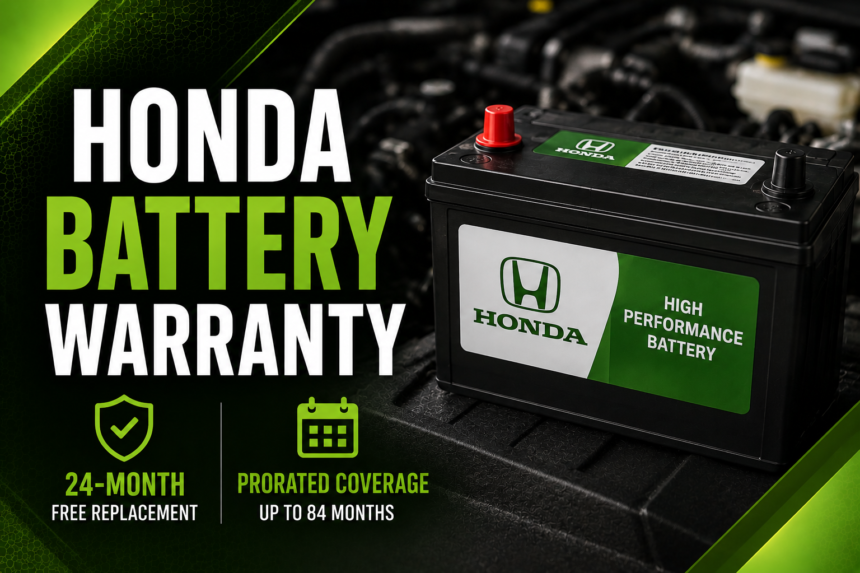
A Honda battery warranty on a dealer-purchased replacement extends for 100 months, or roughly eight years and four months, which is significantly longer than typical retail battery warranties of two to three years.
This extended window gives owners peace of mind that their investment in a genuine part is protected for the vast majority of the battery’s realistic lifespan.
Free Replacement Period Explained
For the first 36 months of ownership, a defective replacement battery is swapped out completely free of charge, covering both the part and the labor for installation.
This mirrors the same protection level as the original factory battery, meaning owners don’t lose any coverage quality by purchasing through an authorized dealer.
Prorated Coverage After 36 Months
Once the initial 36-month period ends, the remaining coverage shifts to a prorated system where owners receive a percentage credit toward a new battery based on how much of the 100-month term remains.
Labor and installation costs become the owner’s responsibility during this phase, though the material cost credit still provides meaningful savings.
High-Voltage Battery Warranty for Hybrid and Electric Models
Hybrid and electric Honda vehicles carry a separate warranty for their high-voltage battery pack, reflecting the higher cost and different failure patterns of these components compared to standard 12V batteries. This section outlines how that coverage typically works and where its limits lie.
Coverage Duration and Terms
High-voltage battery warranties generally extend for a longer period than the standard vehicle warranty, often matching or exceeding federal emissions-related component requirements.
The exact number of years and mileage can vary by model year and vehicle type, so checking the specific owner’s manual or Honda’s official warranty documentation for that model is recommended.
What Falls Outside This Warranty
Gradual capacity loss over time is considered normal wear and is explicitly not covered, since all battery packs naturally lose some charging capacity as they age.
This means a hybrid battery that still functions but holds less charge than when new would not typically qualify for a warranty replacement unless it drops below a specific threshold defined by Honda.
What Isn’t Covered Under Any Honda Battery Warranty
Regardless of which battery type or warranty tier applies, certain situations fall outside coverage across the board. Understanding these exclusions upfront helps owners avoid confusion or unexpected costs when visiting a service center.
Damage caused by accidents, collisions, or improper installation by an unauthorized mechanic is never covered under any Honda battery warranty tier. Corrosion resulting from long-term neglect, such as failing to clean terminals or address minor leaks early, is also treated as an owner-maintenance issue rather than a defect.
Batteries that are not genuine Honda parts, including aftermarket or third-party replacements, do not qualify for Honda’s warranty programs even if installed at a Honda dealership. Extreme climate exposure, while it does shorten battery lifespan naturally, is not itself grounds for a warranty claim unless it directly causes a verifiable manufacturing-related failure.
Signs a Honda Battery May Be Failing
Recognizing early warning signs can help owners catch a failing battery before it leaves them stranded, and can also help determine whether a warranty claim is worth pursuing.
Slow Engine Cranking
A noticeably slower start, where the engine takes longer than usual to turn over, is often the earliest sign that a battery is losing its charge capacity. This symptom tends to worsen in cold weather since low temperatures reduce a battery’s effective output.
Dashboard Warning Lights
Modern Honda models are equipped with battery or charging system warning indicators that illuminate when voltage output falls outside normal ranges. Ignoring this light can lead to a complete battery failure, so a service visit is recommended as soon as it appears.
Visible Corrosion or Swelling
White or bluish corrosion buildup around the battery terminals, along with any visible swelling of the battery case, are physical signs that replacement is likely needed soon.
These issues can sometimes be linked to age-related wear rather than a covered defect, so a technician’s diagnosis matters for warranty eligibility.
How to File a Honda Battery Warranty Claim
Filing a claim is a straightforward process when handled through an authorized Honda dealership, and having the right documentation ready speeds things up considerably.
Verifying Warranty Status
Owners can confirm their current battery warranty status by providing their Vehicle Identification Number to any authorized Honda service center, which pulls up the exact coverage dates and mileage eligibility on file. This step should always happen before assuming a battery issue is or isn’t covered.
Required Documentation
Bringing the original purchase receipt, especially for a replacement battery bought after the factory warranty ended, ensures the 100-month clock is calculated from the correct start date.
Service records showing regular maintenance can also strengthen a claim if there’s any dispute about neglect versus genuine defect.
Dealer vs Third-Party Service Centers
Warranty claims must be processed through an authorized Honda dealer to remain valid, since third-party repair shops are not authorized to approve or fulfill Honda’s specific battery warranty terms. Using a non-Honda facility for battery replacement, even under warranty, can result in denied claims later.
Battery Replacement Costs With and Without Warranty
Understanding potential out-of-pocket costs helps owners budget appropriately, whether their battery is fully covered or falls into a prorated or expired warranty period.
| Scenario | Estimated Cost to Owner |
| Within 36-month free replacement window | $0 (parts and labor covered) |
| Prorated period (months 37–100) | Partial cost, credit applied toward new battery |
| Outside all warranty coverage | Full retail price, typically $75–$250 |
| Aftermarket battery replacement | Full cost, no Honda warranty applies |
Tips to Extend Honda Battery Life
A few consistent habits can meaningfully extend how long a Honda battery lasts, reducing how often owners need to rely on warranty claims or out-of-pocket replacements.
Turning off headlights, interior lights, and accessories fully before exiting the vehicle prevents unnecessary drain that can weaken a battery over time. Avoiding frequent short trips is equally important, since brief drives don’t give the alternator enough time to fully recharge the battery between uses.
Scheduling regular battery health checks during routine maintenance visits allows technicians to catch early signs of decline before a full failure occurs, particularly useful for owners living in areas with harsh summer or winter temperatures.
Frequently Asked Questions
Does the Honda battery warranty transfer to a new owner if the car is sold?
Warranty coverage for the original battery typically transfers with the vehicle since it’s tied to the VIN, not the original purchaser, though replacement battery warranties may have their own transfer rules worth confirming with a dealer.
Does the warranty cover jump-starts or roadside assistance?
The battery warranty itself covers replacement of a defective unit, not roadside services like jump-starts, which usually fall under a separate roadside assistance plan if the owner has one.
What happens if I install a non-Honda battery in my vehicle?
Installing an aftermarket battery voids eligibility for Honda’s specific battery warranty programs, since coverage is tied to genuine Honda parts purchased and installed through authorized channels.
Is the high-voltage hybrid battery warranty the same across all Honda models?
No, coverage length and terms can vary by model year and vehicle type, so checking the specific documentation for that model is the most reliable way to confirm exact terms.
Conclusion
The Honda battery warranty offers strong, layered protection whether an owner is dealing with the original factory-installed 12V battery, a dealer-purchased replacement, or the high-voltage pack in a hybrid model.
Compared to many competitors who offer shorter two- to three-year coverage on replacement batteries, Honda’s 100-month protection stands out as notably more generous. Keeping documentation organized, using genuine parts, and staying alert to early warning signs are the simplest ways owners can make the most of this coverage and avoid unnecessary replacement costs down the road.
Related Articles
How Long to Trickle Charge a Car Battery? (Full Time Guide)
Will a Trickle Charger Charge a Dead Battery? The Complete Guide
How Long Does a Battery Take to Charge? Complete 2026 Guide
How to Fix a Battery Discharge Warning On Kia: Complete Guide