


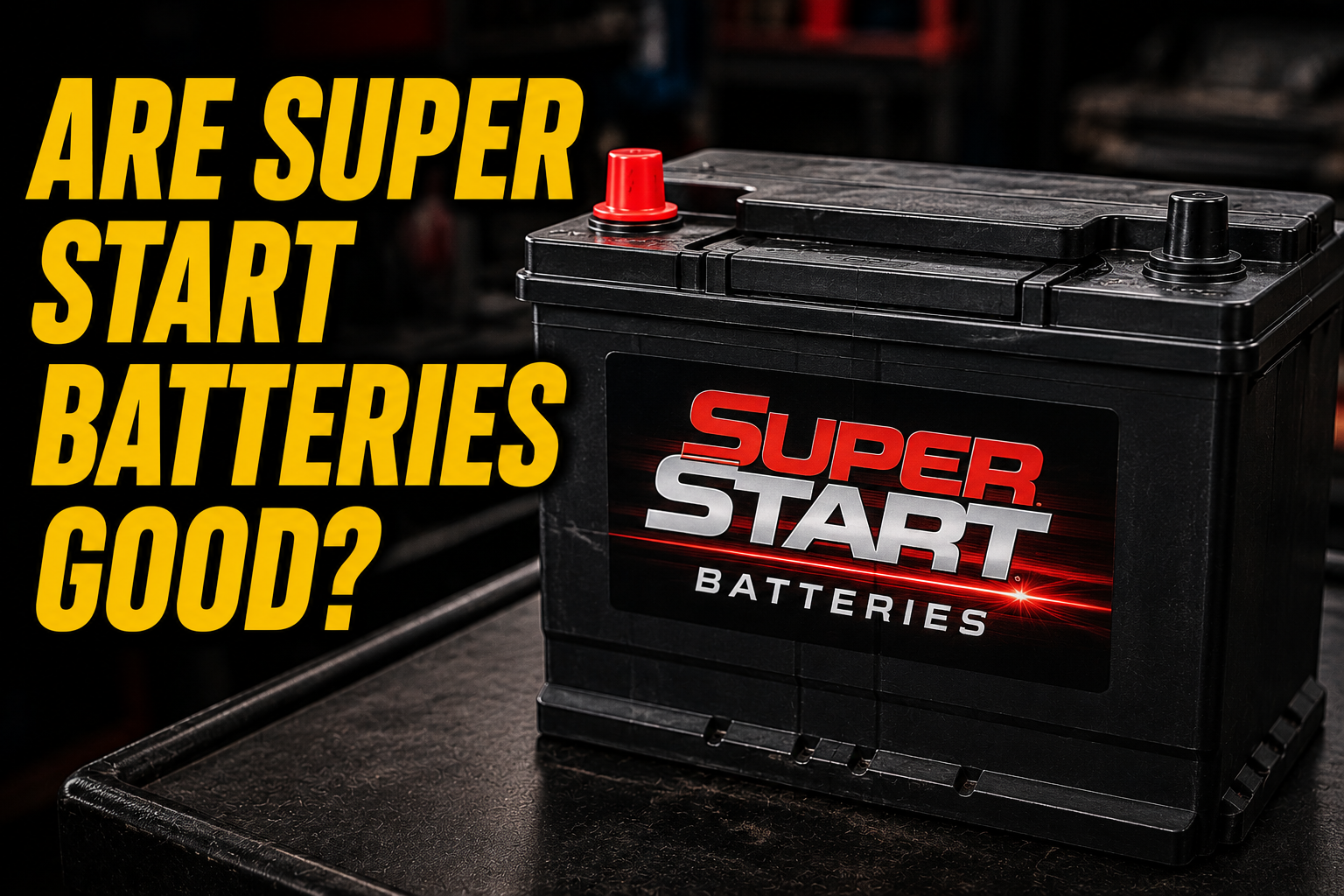
Yes, Super Start batteries are good, and for most drivers they are a smart way to spend less without buying junk. Here is the one thing to know before you pay: which tier you buy matters more than the name on the label. Super Start is the house battery brand at O’Reilly Auto Parts, and the same badge covers everything from a bare-bones economy battery to a heavy-duty AGM. Match the tier to your car and how you drive, and you get dependable power at a fair price.
- The short answer: are Super Start batteries good?
- Who actually makes Super Start batteries?
- The four Super Start tiers (and which one you need)
- How long do Super Start batteries last?
- What owners like, and the common complaints
- How to pick and buy the right one
- Conclusion
- Frequently asked questions
- Related Articles
The short answer: are Super Start batteries good?
Super Start batteries are a solid, sensible choice for daily drivers. They start reliably in heat and cold, they hold up well over years of use in the mid and upper tiers, and they usually cost less than the big name brands. The main catch is that a one-year economy battery and a four-year AGM are very different products wearing the same name, so ‘is it good’ really depends on picking the right one.
If you want a quick rule: the Premium tier suits most cars, the Extreme tier is worth it in harsh climates, and the Platinum AGM is the pick for start-stop engines and cars packed with electronics. Get the tier right and you will likely forget the battery is even there for years.
Who actually makes Super Start batteries?
Super Start does not run its own factories. The batteries are built by two of the largest and most respected battery makers in North America: East Penn Manufacturing and Clarios (the company formerly known as Johnson Controls). These are the same firms that build batteries for many familiar name brands, so the quality inside a Super Start is real, not a bargain-bin substitute.
East Penn also makes the well-regarded Deka line and has supplied O’Reilly for decades from its plant in Lyon Station, Pennsylvania. Clarios builds power for roughly one in three cars on the road worldwide. In plain terms, you are buying a battery from a major manufacturer, just sold under a store brand at a lower price. That is where a lot of the value comes from.
You can often spot the maker yourself. Look for a date code or manufacturer stamp on the case, and if you want the official specs for a battery in your cart, O’Reilly lists group size, cold cranking amps, and reserve capacity on each product page on the Super Start battery page.
The four Super Start tiers (and which one you need)
O’Reilly sells Super Start in four tiers. This is the part that decides whether you end up happy or frustrated, because the price and the build change a lot from the bottom to the top. Here is how they stack up.
| Tier | Technology | Free replacement | Best for |
| Economy | Flooded lead-acid | About 1 year | Older cars, low electrical needs, or a car you plan to sell soon |
| Premium | Flooded lead-acid | About 2 years | Most everyday drivers who want reliable starts without overspending |
| Extreme | Flooded or AGM | About 3 years | Very hot or very cold climates, rough roads, heavy vibration |
| Platinum | AGM | About 4 years | Start-stop engines and cars with lots of electronics |
Economy. This is the get-you-running option. It meets your car’s basic specs and nothing more, with about a year of free replacement. It is fine for an older car with simple electrical needs, or one you plan to sell soon. For a few dollars more, most people are better off stepping up.
Premium. Standard flooded lead-acid, and the workhorse of the lineup. It starts reliably in most climates, costs far less than the fancy tiers, and many owners report it lasting well past its free-replacement window. For the average driver, this is the sweet spot.
Extreme. Available in flooded and AGM versions, with heavier grids and beefier plates for more starting power and better vibration resistance. If you live with brutal summers, hard winters, or rough roads, the sturdier build earns its keep.
Platinum. Top-shelf AGM (absorbed glass mat) technology. It is sealed, spill-proof, and handles heavy accessory loads and constant restarts. This is the tier for start-stop engines and tech-heavy vehicles that ask a lot from the battery.
Rule of thumb: buy the tier that matches how long you will keep the car and how tough your climate is. Under-buying is the most common regret.
How long do Super Start batteries last?
A Super Start battery usually lasts somewhere between three and seven years. Where you land in that range depends mostly on two things: your climate and the tier you bought. This is normal for lead-acid batteries in general, not a quirk of the brand.
Heat is the real enemy. In hot places like Texas or Arizona, three to four years is common for the flooded models, because high temperatures wear the internal plates faster. In milder or cooler climates, five years or more is normal, and plenty of Premium owners get well beyond the warranty period. AGM Platinum batteries tend to sit at the longer end of that range because of their sturdier build.
You can stretch the life of any of them with a few simple habits: keep the terminals clean and tight, drive the car often enough to keep it charged, and have your charging system checked if the battery keeps going flat. A weak alternator kills good batteries, so a battery that dies early is not always the battery’s fault.
What owners like, and the common complaints
The praise is consistent. Drivers like the reliable cold-weather starts, the low fuss, and the price. The upper tiers get credit for tough construction that shrugs off heat and vibration, and the Premium tier in particular has a reputation as a quietly dependable battery that just does its job. Wide availability helps too, since an O’Reilly store is usually close by for a quick swap or a free test.
There are real gripes worth knowing before you buy:
- The warranty depends on your receipt. The most common frustration is not being able to claim a warranty because the proof of purchase is gone. Coverage looks good on paper, but you have to be able to prove when you bought it.
- Value drops at the top end. The Extreme and Platinum tiers approach the price of premium name brands, so the biggest savings sit in the Economy and Premium lines.
- The occasional early failure. As with any brand, a small number of owners hit a battery that quits within months. This is exactly where the warranty, and that receipt, save the day.
- Shorter life in extreme heat. Flooded models in very hot regions tend to land at the low end of the lifespan range.
None of these are dealbreakers, and most trace back to the same fix: buy the right tier and keep your proof of purchase.
How to pick and buy the right one
Buying the right Super Start battery is a short, clear process. Follow these steps and you will avoid almost every common regret.
- Find your group size. Check your owner’s manual or read it off your old battery. Common sizes include 24F, 35, 48, 65, and 78. The battery has to physically fit and match your car’s terminal layout.
- Match the CCA and reserve capacity to your car. Do not go below the cold cranking amps your vehicle calls for. Higher is fine, especially in cold climates.
- Pick your tier by climate and how long you will keep the car. Keeping it five or more years, or living with harsh weather? Step up to Premium, Extreme, or Platinum. Selling soon? Economy is fine.
- Check the date code before you leave. A fresher battery has spent less time slowly discharging on a shelf. Ask a store tech if you cannot read the sticker.
- Save your receipt or register the purchase to your O’Reilly account. This is the single most useful thing you can do, because a warranty only helps if you can actually claim it.
If your car has start-stop technology or a long list of electronics, do not put a basic flooded battery in it. Those systems are built around AGM, and using the wrong type leads to short life and warning lights.
Conclusion
Super Start batteries are good, and they are strong value because major makers build them and O’Reilly sells them for less. The real decision is the tier: Premium for most drivers, Extreme for harsh climates, and Platinum AGM for start-stop and tech-heavy cars. Match the battery to your vehicle and climate, buy a fresh one, and keep your receipt so the warranty protects you. Do that, and you should get years of reliable starts without paying name-brand prices.
Frequently asked questions
Are Super Start batteries as good as Duracell or DieHard? For most drivers, yes. They are built by the same kind of major manufacturers and usually cost less. Premium name brands may edge them out on lifespan in some cases, but the value gap is real, especially in the Premium tier.
Which Super Start tier should most people buy? The Premium tier. It uses standard flooded lead-acid technology, starts reliably in most climates, and often outlasts its free-replacement period. Step up to Extreme or Platinum only for harsh weather or start-stop and tech-heavy cars.
How do I claim a Super Start battery warranty? Bring the battery and your proof of purchase to any O’Reilly Auto Parts store. A tech tests it, and if it is confirmed defective within the free-replacement window, you get a replacement. Keep your receipt, since claims can be denied without it.
Do I need an AGM battery? Only if your car calls for one. Vehicles with start-stop engines, heavy accessory loads, or lots of electronics are designed for AGM, which is the Platinum tier. A standard car runs fine on a flooded Premium or Extreme battery.
How long is a Super Start battery good for? Usually three to seven years. Hot climates push it toward the low end, milder climates toward the high end, and the sturdier upper tiers tend to last longer. Clean terminals and a healthy charging system help it reach the top of that range.
Related Articles
Can a Battery Be Too Dead to Jump? When a Jump Works and When It Won’t
Can a Bad Starter Drain a Battery?
Can a Car Battery Die While Driving?
Can an Alternator Kill a Battery?
Are Optima Batteries Worth It?