


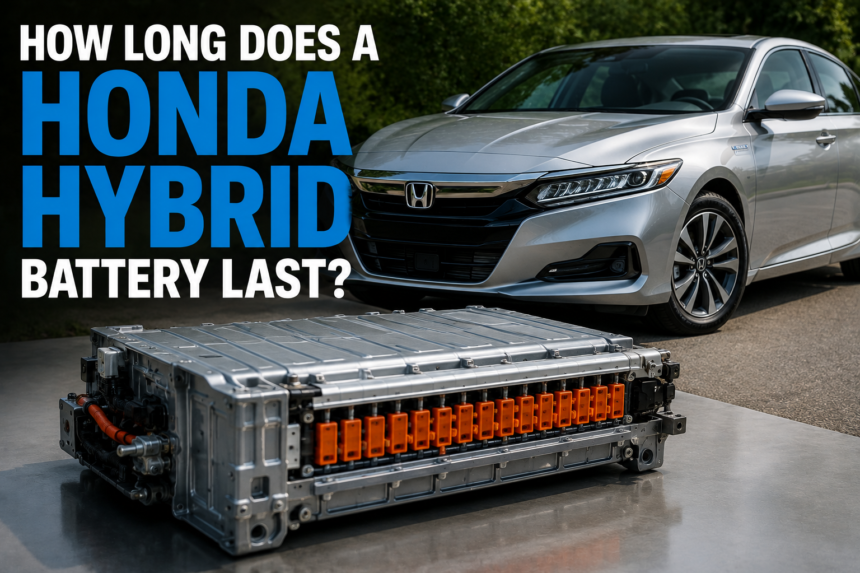
If you own a Honda hybrid or you’re thinking about buying one, there’s a good chance one question keeps popping into your head: how long does a Honda hybrid battery last? It’s a fair question. The battery is the heart of any hybrid system, and replacing it can feel like a scary, expensive unknown if you don’t know what to expect.
- Understanding Honda Hybrid Battery Types
- Average Lifespan of Honda Hybrid Batteries
- Honda’s Hybrid Battery Warranty Coverage
- Factors That Affect Battery Lifespan
- Signs Your Hybrid Battery Is Wearing Out
- How to Extend Your Hybrid Battery’s Life?
- Cost of Replacing a Honda Hybrid Battery
- Honda Models & Their Battery Track Records
- Frequently Asked Questions
- Conclusion
- Related Articles
The short answer is that most Honda hybrid batteries last somewhere between 8 and 10 years, or roughly 100,000 to 150,000 miles, before they start showing real signs of decline. Many owners report their batteries lasting well beyond that, sometimes past 200,000 miles, especially when the car is driven sensibly and maintained on schedule. That said, the exact number depends on several factors we’ll walk through in detail below.
This guide breaks down everything you need to know: the types of batteries Honda uses, how long they typically last, what’s covered under warranty, the warning signs of a failing battery, how to stretch its life as long as possible, what replacement actually costs, and how different Honda hybrid models compare. By the end, you’ll have a clear, realistic picture instead of guesswork.
Understanding Honda Hybrid Battery Types
Not all Honda hybrid batteries are built the same way, and the type installed in your car has a real effect on how long it lasts and how it behaves as it ages.
Nickel-Metal Hydride (NiMH) batteries were Honda’s go-to technology for many years, especially in earlier hybrid models like the first-generation Insight, older Civic Hybrids, and early Accord Hybrids. NiMH batteries are known for being tough and reliable, though they’re heavier and slightly less efficient than newer alternatives. They tend to degrade gradually rather than failing all at once, which is actually good news for owners since it gives plenty of warning before a full replacement is needed.
Lithium-ion (Li-ion) batteries are what you’ll find in most modern Honda hybrids, including the current Accord Hybrid, CR-V Hybrid, and newer Insight models. Lithium-ion technology is lighter, packs more energy into a smaller space, and generally offers a longer usable life than NiMH when properly managed. It’s also more sensitive to extreme heat, which is something owners in hot climates should keep in mind.
Here’s a quick breakdown of which battery type shows up in which Honda hybrid generation:

| Honda Model | Battery Type | Approximate Model Years |
|---|---|---|
| First-Gen Insight | NiMH | 2000–2006 |
| Civic Hybrid | NiMH | 2003–2015 |
| Accord Hybrid (older) | NiMH | 2005–2007 |
| Second-Gen Insight | NiMH | 2010–2014 |
| Accord Hybrid (current) | Lithium-ion | 2014–present |
| CR-V Hybrid | Lithium-ion | 2020–present |
| Third-Gen Insight | Lithium-ion | 2019–2022 |
Knowing which battery your car has isn’t just trivia. It helps set realistic expectations for lifespan and gives you a better idea of what a future replacement might involve.
Average Lifespan of Honda Hybrid Batteries
So let’s get back to the core question: how long does a Honda hybrid battery last in real-world terms? On average, Honda hybrid batteries are engineered to perform reliably for 8 to 10 years or 100,000 to 150,000 miles. This is the range most manufacturers, including Honda, design around, and it lines up closely with what independent mechanics and hybrid specialists report seeing in the field.
What’s encouraging is that this is a conservative estimate, not a hard ceiling. Plenty of Honda hybrid owners, particularly those with Civic Hybrids and Accord Hybrids, have reported their original battery packs still functioning well past 150,000 miles, with some anecdotal cases stretching to 200,000 miles or more. Taxi and rideshare drivers, who rack up miles quickly but often at steady highway speeds, have been a useful real-world proving ground for this kind of longevity.
It’s worth noting that “lasting” doesn’t mean the battery performs exactly like it did on day one. Like any battery, a hybrid pack experiences a slow, gradual decline in capacity over time. You probably won’t notice a dramatic drop-off; instead, you’ll likely see a slight dip in fuel economy or a shorter electric-only range long before the battery actually fails outright. This gradual fade is one of the reasons Honda hybrids have built such a strong reputation for durability compared to some early hybrid competitors.
Honda’s Hybrid Battery Warranty Coverage
One of the best parts of owning a Honda hybrid is the safety net Honda provides through its warranty program. This coverage is a big reason many buyers feel confident about hybrid ownership rather than worried about a surprise repair bill.
Honda’s standard hybrid battery warranty covers 8 years or 100,000 miles, whichever comes first. In California and other states that follow California’s stricter emissions regulations (a group that includes several states across the Northeast and West Coast), the coverage is extended to 10 years or 150,000 miles. This extended coverage exists because hybrid batteries are classified as emissions-related components in those states, which pushes manufacturers to back them for longer.
Here’s a simple table summarizing the coverage:
| Coverage Type | Standard States | CARB-Emission States |
|---|---|---|
| Hybrid Battery Warranty | 8 years / 100,000 miles | 10 years / 150,000 miles |
| What’s Covered | Battery defects, capacity loss below threshold | Same, plus additional emissions-related parts |
| Transferable | Yes, to subsequent owners | Yes, to subsequent owners |
What the warranty typically covers includes manufacturing defects and cases where the battery’s capacity drops below a functional threshold set by Honda. It generally does not cover damage from accidents, neglect, unauthorized modifications, or normal gradual capacity loss that stays within acceptable limits.
If you’re buying a used Honda hybrid, it’s worth checking the original in-service date and mileage to see how much warranty coverage, if any, is left. Honda dealerships can look this up using the vehicle’s VIN, and it’s a smart step before finalizing a used hybrid purchase.
Factors That Affect Battery Lifespan
While Honda engineers its hybrid batteries for long-term durability, real-world lifespan can vary quite a bit from car to car. Several factors play into this.
Driving habits make a noticeable difference. Smooth, steady driving with gradual acceleration and braking puts less strain on the battery than aggressive, stop-and-go driving. Interestingly, city driving with frequent regenerative braking can actually be kinder to a hybrid battery than constant high-speed highway driving, since the system gets more opportunities to cycle the battery gently rather than draining it hard.
Climate and temperature extremes matter a lot too. Batteries, especially lithium-ion ones, don’t love extreme heat. Owners in consistently hot climates may see slightly faster capacity fade compared to those in milder regions. Cold weather isn’t as damaging long-term, though it can temporarily reduce efficiency in the short term.
Charging and discharging patterns also play a role, even though Honda hybrids manage this automatically through their onboard computer systems. The car is designed to keep the battery within a safe charge range rather than letting it hit extreme highs or lows, which helps protect long-term health without the driver needing to do anything special.
Regular maintenance shouldn’t be overlooked either. Keeping up with scheduled hybrid system checks, software updates, and general vehicle maintenance helps the battery management system do its job properly, catching small issues before they become bigger ones.
Finally, simple mileage and age accumulation naturally affect any battery over time, regardless of how well it’s treated. Every battery has a finite number of charge cycles, and eventually, gradual wear catches up.
Signs Your Hybrid Battery Is Wearing Out
Because hybrid batteries tend to degrade slowly, it helps to know what warning signs to watch for so you’re not caught off guard.
A noticeable drop in fuel economy is often the earliest sign. If your Honda hybrid suddenly isn’t hitting the mpg numbers it used to, a weakening battery could be part of the reason, since the gas engine has to work harder to compensate.
You might also notice the gasoline engine kicking in more frequently, even during situations where the car would normally rely on electric power, like slow city driving or coasting.
Dashboard warning lights, particularly ones related to the hybrid system or battery, are a clear signal that something needs attention. Modern Honda hybrids are good at flagging issues early through the onboard diagnostics system.
Some drivers report rough idling or occasional stalling as the battery’s ability to smoothly support the gas engine diminishes. Reduced acceleration power, especially a sense of sluggishness when merging or climbing hills, is another common symptom, since the electric motor isn’t providing as much of a boost as it used to.
None of these signs alone confirms a battery is dying, since some can point to unrelated issues. But if you notice more than one at the same time, it’s worth getting the hybrid system checked by a qualified technician.
How to Extend Your Hybrid Battery’s Life?
While you can’t stop a battery from aging entirely, there’s a lot you can do to help it last closer to the high end of its expected range rather than the low end.
Avoiding extreme temperatures when possible helps a lot. Parking in shade or a garage during hot summer months can reduce heat stress on the battery pack over time.
Keeping up with regular maintenance check-ups ensures the hybrid system’s software and components are functioning as intended. Dealerships often include hybrid-specific inspections as part of routine service.
Driving smoothly, with gentle acceleration and anticipating stops rather than braking hard at the last second, reduces unnecessary strain on both the battery and the regenerative braking system.
Letting the car’s automatic systems manage charging is generally best. Honda’s hybrid batteries are designed to stay within an optimal charge range on their own, so there’s no need to manually intervene.
Staying current with any manufacturer software updates matters more than people expect. Honda occasionally releases updates that improve how the battery management system handles charging and temperature regulation, which can have a real impact on long-term battery health.
Cost of Replacing a Honda Hybrid Battery
Eventually, even a well-cared-for battery will need replacing. Costs vary depending on the model, the type of battery, and whether you choose an OEM, aftermarket, or refurbished option.
| Honda Model | Estimated OEM Replacement Cost | Estimated Aftermarket/Refurbished Cost |
|---|---|---|
| Civic Hybrid | $2,000–$3,500 | $1,200–$2,000 |
| Insight | $2,500–$4,000 | $1,500–$2,500 |
| Accord Hybrid | $3,000–$4,500 | $1,800–$2,800 |
| CR-V Hybrid | $3,500–$5,000 | $2,000–$3,000 |
These figures typically include the battery pack itself, though labor costs can add several hundred dollars more depending on the shop and region. OEM (original equipment manufacturer) batteries from Honda tend to be the most expensive but come with the strongest reliability track record. Aftermarket and refurbished batteries can offer meaningful savings and are often backed by their own separate warranties, though quality can vary between suppliers.
There are ways to reduce the financial impact. If your battery fails within the warranty period, replacement is typically covered at no cost. Some owners also explore certified hybrid battery reconditioning programs, which restore an existing battery pack’s performance for a fraction of full replacement cost, though this option works better for some degradation issues than others.
Honda Models & Their Battery Track Records
Different Honda hybrid models have built slightly different reputations over the years when it comes to battery durability.
The Honda Insight, in both its earlier and more recent generations, has generally earned a strong reputation for battery longevity, with many owners reporting minimal issues well past the 100,000-mile mark.
The Civic Hybrid is one of the more well-documented models, thanks to its long production run. It has a mixed but largely positive track record, with NiMH-equipped models from the mid-2000s through mid-2010s generally proving durable when maintained properly.
The Accord Hybrid, especially in its current lithium-ion form, benefits from newer battery technology and tends to show strong real-world durability, with fewer widespread complaints compared to some earlier hybrid generations across the industry.
The CR-V Hybrid, being a newer addition to Honda’s hybrid lineup, doesn’t have as long a track record yet, but early data and owner reports suggest it’s performing in line with Honda’s other lithium-ion hybrid models.
Frequently Asked Questions
Can you replace just part of a hybrid battery instead of the whole pack? In some cases, yes. Hybrid battery packs are made up of individual modules, and some repair specialists can replace only the failing modules rather than the entire pack, which can be more affordable. This isn’t always possible depending on the extent of degradation, but it’s worth asking about before committing to a full replacement.
Does hybrid battery health affect a car’s resale value? Yes, it can. A documented healthy battery, especially one with remaining warranty coverage, tends to support a stronger resale value. Buyers are often willing to pay a bit more for peace of mind on this front.
Is it worth buying a used Honda hybrid with an older battery? It can still be a smart purchase, especially given how long does a Honda hybrid battery last on average. Just make sure to check the battery’s age, mileage, remaining warranty coverage, and ideally get a hybrid system inspection before buying.
How does Honda hybrid battery life compare to full electric vehicle battery life? Hybrid batteries generally experience less strain than full EV batteries since they’re smaller and used differently, often resulting in comparable or even longer effective lifespans in terms of years, despite storing far less energy overall.
Conclusion
So, how long does a Honda hybrid battery last? For most owners, the realistic answer is 8 to 10 years or 100,000 to 150,000 miles, with many batteries continuing to perform well beyond that range when the car is driven sensibly and maintained properly. Honda backs this durability with a solid warranty, either 8 years/100,000 miles or 10 years/150,000 miles depending on where you live, which adds an extra layer of confidence for both new and used buyers.
Whether you’re currently driving a Honda hybrid or considering buying one, understanding these lifespan expectations, warning signs, and maintenance habits puts you in a much better position to get the most out of your battery, and your investment, for years to come.
Related Articles
How Long Does a DeWalt Battery Last? Lifespan, Runtime & Care Guide
How Long Do Ryobi Batteries Last? Full Lifespan Guide