


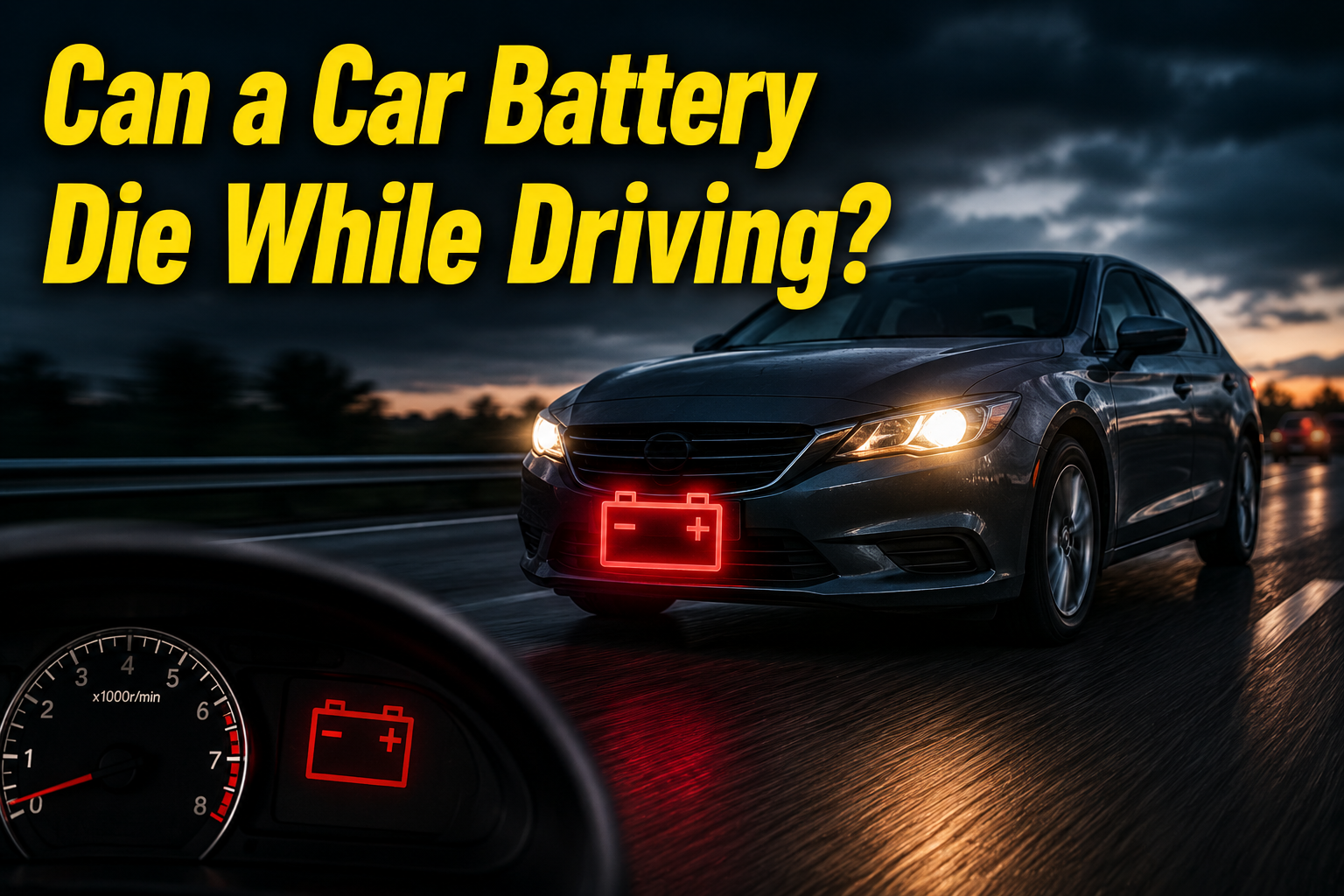
Yes, a car battery can die while you are driving, though it is uncommon when the electrical system is healthy. And here is the part that matters most: when a car loses power on the road, the battery itself is usually not the real cause.
- How the battery and alternator share the work?
- What actually makes a battery die mid-drive?
- Warning signs to watch for
- What to do if your car loses power while driving?
- Will a jump-start fix it?
- How to prevent it?
- Conclusion
- Frequently asked questions
- Can a car run without a battery once it’s started?
- Is it the battery or the alternator if my car dies while driving?
- How long can I drive with a failing alternator?
- What are the first signs of a dying alternator?
- Will a jump-start get me home if my car died while driving?
- Related Articles
The far more common culprit is a failing charging system, especially the alternator. Once you understand how the two work together, a scary situation becomes a lot more predictable. Here is what is really going on and what to do about it.
How the battery and alternator share the work?
Your car’s electrical system leans on two parts working as a team. The battery has one main job: to provide the burst of power that starts the engine. Once the engine is running, the alternator takes over. It generates electricity to run everything, the headlights, wipers, power steering, climate control, infotainment, and it recharges the battery at the same time.
That hand-off is why a battery problem often hides until you shut the car off. If the alternator is working, the car keeps running even with a weak or failing battery, and you only discover the trouble when you turn the key and nothing happens. But flip it around: if the alternator or another charging component fails, the car is suddenly running on the battery alone. Once that stored power drains, the engine stalls, and that is a battery dying mid-drive.
How long you get in that situation depends on how much charge the battery had and how much the car is using. Running headlights, wipers, the heater fan, and the radio all speed up the drain, while a car in daylight with everything off might coast further.
Either way the clock is running from the moment the alternator quits, which is why the first thing to do when you notice a charging warning is to shed electrical load, not to press on and hope.
The key idea: A running car is mostly powered by the alternator, not the battery. So a car that dies while driving usually has a charging problem, not just a bad battery.
What actually makes a battery die mid-drive?
When a car loses power on the road, a few causes come up again and again. Most trace back to the charging system rather than the battery on its own, which is why mechanics tend to check the alternator and belt before condemning the battery.
- A failing alternator. This is the most common reason. If the alternator’s internal parts wear out, it stops producing enough electricity, and the battery drains until the car shuts off.
- A broken or slipping drive belt. The belt spins the alternator. If it breaks or slips, the alternator stops charging even if the alternator itself is fine.
- Loose or corroded connections. Even a good battery and alternator cannot do their job if the cables or terminals are loose or corroded, since corrosion blocks current and a loose clamp can cut power entirely.
- A shorted battery cell. A battery with an internal short can fail suddenly. If the alternator is healthy, the car may keep running but will not restart once switched off; if the charging system is also weak, it can stall.
- Extreme temperatures. Heat speeds up the chemical breakdown inside a battery and cold cuts its ability to hold charge. Extreme weather can push an already weak battery over the edge, especially if the alternator is not at full strength.
Warning signs to watch for
Electrical failures rarely strike out of nowhere. Drivers usually get subtle hints first, and catching them early can save you a stall on the highway. Watch for these:
| Warning sign | What it often points to |
| Battery or charging warning light | The charging system is not keeping up |
| Dim or flickering headlights | Voltage dropping, often a failing alternator |
| Slow or struggling electronics | Windows, wipers, or radio starved of power |
| Whining or grinding from the alternator | Worn alternator bearings or belt |
| A burning-rubber smell | A slipping or failing drive belt |
If any of these show up, do not brush them off. Electrical problems tend to snowball, and a small charging issue today can become a dead car tomorrow. Getting the battery and alternator tested at the first sign is far cheaper than a tow.
Pay special attention if two or more signs appear together, such as a warning light plus dimming lights, since that combination strongly suggests the alternator rather than a one-off glitch.
What to do if your car loses power while driving?
If the car starts losing power on the road, the priority is getting safely off the road while you still have momentum. Work through these calmly.
- Turn on your hazard lights. Do this immediately so other drivers can see you, while you still have enough power to run them.
- Ease off and steer to safety. Take your foot off the accelerator, signal, and coast to the shoulder or a safe spot while the car still has momentum. Steering and brakes get heavier without power assist, so plan for more effort.
- Switch off non-essential electronics. Turn off the radio, climate control, and anything you do not need, to conserve whatever charge is left.
- Do not crank the key over and over. Once the charge is gone, repeated cranking will not help and only drains things further.
- Stay safe while you wait. If you are stuck in traffic, stay in the car with your seatbelt on until it is safe to get out. Reflective triangles or flares improve your visibility on the roadside.
- Call for help. Arrange roadside assistance or a tow. This is the reliable option, especially if the alternator has failed.
Will a jump-start fix it?
A jump-start can get the engine running again, but whether it lasts depends on why the car died. If the problem was truly just a weak battery and the alternator is healthy, a jump can carry you home or to a shop.
If the alternator has failed, though, the car is running on borrowed time: with nothing recharging the battery, it will drain again and stall, often within minutes to a short distance. A telltale sign is how the car behaves right after the jump: if the headlights are dim at idle and the dashboard warning light stays on, the alternator is not charging and you are on the clock.
So treat a successful jump as a chance to get somewhere safe, not as a repair. If you are close to home and have a portable jump starter, you might limp there, but do not count on it lasting. The real fix is to have the charging system diagnosed.
A shop can test the alternator’s output and the battery’s health in a few minutes and tell you which part actually failed. For a fuller rundown of causes and roadside steps, AutoZone’s guide is a useful reference.
How to prevent it?
Most battery and charging failures give warning, and a little upkeep goes a long way. These habits keep the odds low:
- Test the battery and alternator regularly. Especially as the battery passes the three-to-five-year mark, a quick test catches weakness before it strands you.
- Keep terminals clean and tight. Check the connections for corrosion and looseness now and then, and clean them when needed.
- Watch the drive belt. A cracked or worn serpentine belt is cheap to replace and prevents a sudden loss of charging.
- Act on warning signs fast. A battery light, dimming headlights, or odd noises are cues to get checked, not to wait and see.
- Replace an aging battery proactively. If yours is old and weak, swapping it before it fails is far less stressful than a roadside dead battery.
Conclusion
So, can a battery die while driving? Yes, but it is rare, and the battery is usually not the whole story. A running car leans on the alternator, so a car that dies on the road most often has a charging system problem.
If it happens, get safely off the road with your hazards on, conserve power, and call for help rather than counting on a jump. Watch for the early warning signs and keep the battery, alternator, and belt in good shape, and you will almost never face it.
Frequently asked questions
Can a car run without a battery once it’s started?
In theory a healthy alternator can keep a running engine going, but it is not safe or reliable. Voltage spikes can damage electronics, and you would have no way to restart. Do not rely on it.
Is it the battery or the alternator if my car dies while driving?
Usually the alternator or charging system, since a running car is powered by the alternator. A battery that tests fine but the car still stalls points to charging trouble. Get both tested.
How long can I drive with a failing alternator?
Not long, sometimes only minutes to a short distance, because the car runs on the battery alone. Turn off non-essential electronics and head straight to a safe place or a shop.
What are the first signs of a dying alternator?
A battery or charging warning light, dim or flickering headlights, slow electronics, whining noises, or a burning-rubber smell from a slipping belt. These are cues to get it checked promptly.
Will a jump-start get me home if my car died while driving?
Maybe briefly. If it was just a weak battery, a jump may hold. If the alternator failed, the car will drain and stall again soon, so use the jump only to reach safety.
Related Articles
Are Super Start Batteries Good? An Honest Look
Can a Battery Be Too Dead to Jump?
Can a Bad Starter Drain a Battery?
Can an Alternator Kill a Battery?