


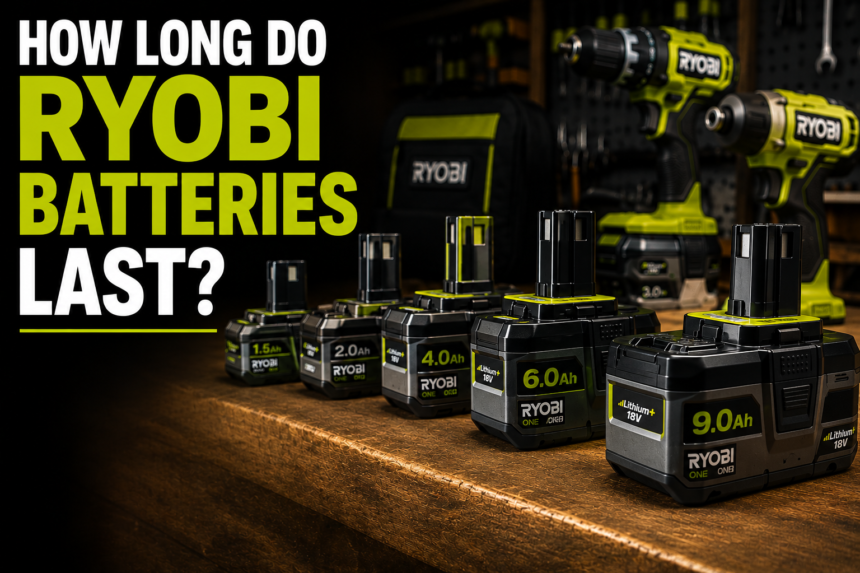
If you own a Ryobi tool, you’ve probably asked yourself at some point: how long do Ryobi batteries last? It’s a fair question, especially if you rely on your drill, trimmer, or blower for regular yard work or home projects. Nobody wants to be halfway through a job when the battery suddenly dies, and nobody wants to keep buying replacements every few months either.
- Types of Ryobi Batteries
- Average Lifespan of Ryobi Batteries
- Factors That Affect Battery Life
- Signs Your Ryobi Battery Is Dying
- How to Extend Ryobi Battery Life
- Ryobi Battery Warranty Information
- When to Replace Your Ryobi Battery
- Comparing Ryobi Battery Lifespan to Competitors
- Frequently Asked Questions
- Conclusion
- Related Articles
The short answer is that most Ryobi batteries last somewhere between three and five years, or roughly 300 to 500 charge cycles, before their performance starts to drop noticeably. But that number isn’t fixed. It depends heavily on the type of battery you own, how often you use it, and how well you take care of it.
In this guide, we’ll walk through everything that affects Ryobi battery life, how to spot the warning signs of a battery on its way out, and practical steps you can take to squeeze more life out of every charge.
Types of Ryobi Batteries
Not all Ryobi batteries are built the same way, and the type you own plays a big role in how long it will realistically last.
NiCd (Nickel-Cadmium) Batteries These are the older style of Ryobi batteries, often found in tools purchased years ago. NiCd batteries are heavier, hold less charge overall, and tend to suffer from something called the “memory effect,” where repeatedly charging a battery that isn’t fully drained can shrink its usable capacity over time. They’re generally more affordable but don’t last as long as their modern counterparts.
Lithium-Ion (Li-Ion) Batteries Most current Ryobi tools use lithium-ion batteries, and for good reason. They’re lighter, hold a charge longer, don’t suffer from the memory effect, and generally last longer per cycle than NiCd batteries. If you’re buying a new Ryobi battery today, it will almost certainly be a Li-Ion model.
The ONE+ Platform Ryobi’s ONE+ system is a big part of why the brand is so popular. It’s a single battery platform that works across an enormous range of tools, from drills to lawn mowers to shop vacuums. This means a well-maintained ONE+ battery can serve you across multiple tools for years, which adds a lot of value even if the battery itself has a defined lifespan.
The table below sums up the key differences:
| Feature | NiCd Batteries | Lithium-Ion Batteries |
|---|---|---|
| Average Lifespan | 2–3 years | 3–5 years |
| Charge Cycles | 200–300 | 300–500+ |
| Weight | Heavier | Lighter |
| Memory Effect | Yes | No |
| Charging Speed | Slower | Faster |
| Price | Lower | Higher |
Average Lifespan of Ryobi Batteries
When people ask how long do Ryobi batteries last, they usually want a number they can plan around. Realistically, there are two ways to measure it: by charge cycles and by calendar years.
A charge cycle is one full discharge and recharge of the battery. Ryobi lithium-ion batteries are generally rated for 300 to 500 charge cycles before capacity noticeably declines. If you use your tools moderately, say a few times a week, that can translate to roughly three to five years of useful service. Heavy daily users, like contractors, may burn through that cycle count faster, sometimes within a year or two.
It’s worth noting that a battery reaching the end of its rated cycle count doesn’t mean it stops working overnight. Instead, you’ll notice a gradual decline in runtime and power output, which is a natural part of how lithium-ion chemistry ages.
Factors That Affect Battery Life
Several everyday habits can either extend or shorten how long your Ryobi battery holds up.
Charging habits matter more than most people realize. Leaving a battery on the charger long after it’s full, or letting it sit completely drained for extended periods, both put unnecessary strain on the internal cells. Storage conditions are just as important. Extreme heat, like leaving a battery in a hot garage or car trunk during summer, accelerates chemical breakdown inside the cells, while freezing temperatures can also cause damage if the battery is charged while cold.
How often and how intensely you use the tool also plays a role. A battery powering a small screwdriver a few times a month will naturally outlast one running a demanding tool like a chainsaw or lawn mower on a weekly basis. The age of the battery matters too, since even unused batteries slowly degrade over time due to natural chemical aging. Finally, using the battery in a compatible tool that doesn’t overdraw its capacity helps avoid the kind of strain that shortens lifespan.
Signs Your Ryobi Battery Is Dying
Batteries rarely fail without warning. Here are the most common signs that yours is on its way out:
- The tool runs out of power much faster than it used to, even on a full charge
- The battery takes noticeably longer to charge, or the charger indicator behaves oddly
- The tool loses power or stalls under normal working load
- The battery drains significantly overnight even when not in use
- You notice physical swelling, cracking, or heat coming from the battery casing
If you spot swelling or visible damage in particular, stop using the battery immediately. A swollen lithium-ion battery is a genuine safety concern and should be handled carefully, ideally taken to a proper battery recycling location rather than kept in use.
How to Extend Ryobi Battery Life
The good news is that a few simple habits can meaningfully extend how long your Ryobi battery lasts.
Try to avoid letting the battery sit at 0% for long stretches, and equally avoid leaving it on the charger for days at a time once it’s full. Charging it before it’s completely dead, and unplugging it once it reaches full charge, is easier on the internal cells. Storage conditions matter a lot too; a cool, dry place away from direct sunlight is ideal, and if you’re storing a battery for the winter or an extended period, charging it to around 50% first is better than storing it fully charged or fully empty.
Keeping the metal contacts clean also helps maintain a solid connection. A small amount of dust or corrosion on the contacts can cause inefficient charging or intermittent power delivery, so wiping them down occasionally with a dry cloth is a quick win. Lastly, always use the charger that came with your Ryobi battery or an official Ryobi replacement, since third-party chargers don’t always regulate voltage the way they should.
Ryobi Battery Warranty Information
Ryobi typically backs its batteries with a limited warranty, generally covering manufacturing defects for around three years on many of their ONE+ lithium-ion batteries, though the exact terms can vary depending on the specific battery model and when it was purchased. The warranty usually covers defects in materials or workmanship but doesn’t cover normal wear and tear, physical damage, or capacity loss that comes naturally with age and use.
To make a warranty claim, you’ll typically need proof of purchase and the original battery, which you can bring to an authorized Ryobi retailer or contact Ryobi customer service directly for guidance. It’s worth registering your tools and batteries when you buy them, since this can make warranty claims faster and easier down the line.
When to Replace Your Ryobi Battery
At some point, every battery reaches a stage where replacing it makes more sense than continuing to use it. If your battery is holding less than half its original runtime, taking much longer to charge, or showing physical signs of wear, it’s usually time for a new one.
Weighing the cost of a new battery against the cost of a new tool is worth doing too. Since Ryobi batteries are often more expensive than budget power tools themselves, some people find it makes more financial sense to simply buy a new tool that includes a fresh battery, especially with kit deals that Ryobi frequently offers.
When a battery does reach the end of its life, don’t just throw it in the trash. Lithium-ion and NiCd batteries both contain materials that need proper recycling. Most hardware stores, including Home Depot, offer battery recycling drop-off bins, and Ryobi itself provides guidance on responsible disposal through its website.
Comparing Ryobi Battery Lifespan to Competitors
It’s natural to wonder how Ryobi stacks up against other major power tool brands when it comes to battery longevity.
| Brand | Average Lifespan | Charge Cycles | Notes |
|---|---|---|---|
| Ryobi | 3–5 years | 300–500 | Best value, huge tool compatibility |
| DeWalt | 3–5 years | 300–500 | Similar lifespan, higher price point |
| Makita | 4–6 years | 400–600 | Slightly longer lifespan, professional-grade |
| Milwaukee | 4–6 years | 400–600 | Built for heavy daily use, premium pricing |
Ryobi generally holds its own in terms of raw lifespan, and its biggest advantage is affordability combined with the sheer number of tools that share the same ONE+ battery platform. Brands like Makita and Milwaukee may edge out Ryobi slightly in cycle count, but they also come at a noticeably higher price, which matters for anyone doing occasional home projects rather than professional daily work.
Frequently Asked Questions
Can I use old Ryobi batteries with new tools? In most cases, yes. Ryobi has kept its ONE+ battery platform largely consistent for years, meaning older batteries generally work with newer tools within the same voltage family, and vice versa.
Do all Ryobi batteries fit all Ryobi tools? Not quite all, but most within the same platform. ONE+ batteries work across the vast majority of Ryobi’s 18V tools, though Ryobi also makes separate battery platforms like 40V for larger outdoor equipment, which aren’t interchangeable with ONE+.
How do I dispose of a dead battery? Never throw a lithium-ion or NiCd battery in regular household trash. Instead, take it to a battery recycling drop-off point, many of which are available for free at hardware stores like Home Depot or Lowe’s.
Conclusion
So, how long do Ryobi batteries last? On average, you can expect somewhere between three and five years, or 300 to 500 charge cycles, depending on the battery type and how well you care for it. Lithium-ion batteries tend to outperform older NiCd models, and simple habits like avoiding extreme temperatures, not overcharging, and keeping contacts clean can meaningfully extend that lifespan.
Paying attention to early warning signs, like reduced runtime or slower charging, gives you time to plan a replacement before a battery fails at an inconvenient moment. And when it does come time to replace it, recycling responsibly ensures your old battery doesn’t end up somewhere it shouldn’t. With a bit of care, your Ryobi battery can keep your tools running reliably for years to come.
Related Articles
How Long Do Ring Camera Batteries Last? Full Guide
Does Low Battery Mode Charge Slower? The Real Answer Explained