


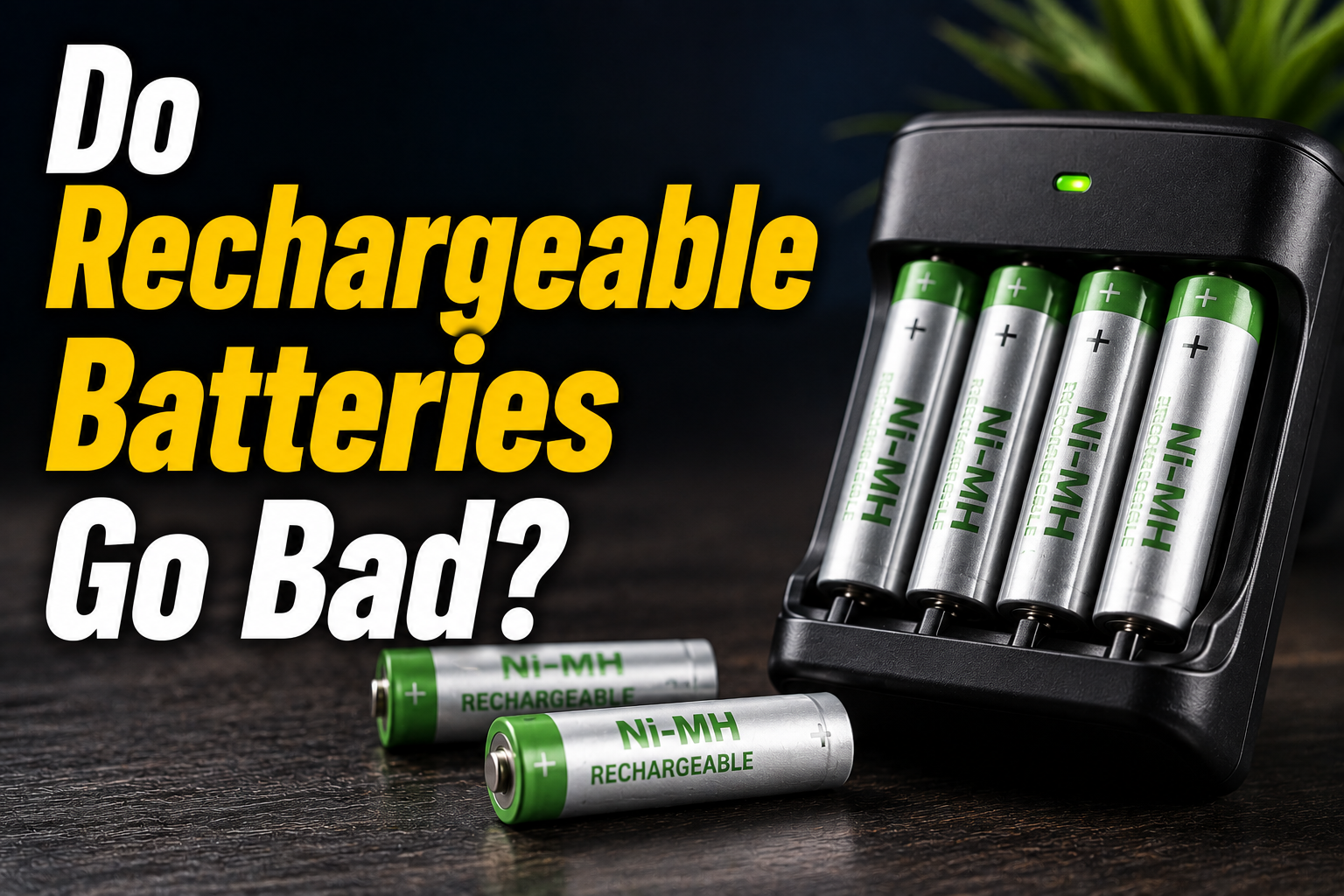
Yes, rechargeable batteries do go bad. No matter how many times they are built to be recharged, they wear out eventually, losing the ability to hold a decent charge. They go bad in two main ways: slowly, as normal use and age chip away at their capacity, and sometimes suddenly, when an internal fault kills a cell outright.
- The two ways a rechargeable battery goes bad
- Do they go bad even if you don’t use them?
- Signs a rechargeable battery has gone bad
- What makes them go bad faster?
- Can you revive a battery that has gone bad?
- When to replace and recycle?
- Conclusion
- Frequently asked questions
- Do rechargeable batteries go bad if you don’t use them?
- How do I know if a rechargeable battery is bad?
- Can a dead rechargeable battery be brought back to life?
- Why do my rechargeable batteries die so quickly now?
- How long before a rechargeable battery goes bad?
- Related Articles
And here is the part that surprises people: rechargeable batteries can go bad even if you rarely use them, because they age and self-discharge just sitting on a shelf. The good news is that the warning signs are easy to spot, some batteries can be partly revived, and knowing the causes helps you make yours last longer. Here is the full picture.
So the honest answer is a clear yes, with a bit of nuance worth understanding. A rechargeable battery that seems weak has not necessarily failed completely, and why it went bad, and whether you can do anything about it, depends on the type and the cause.
Below we cover the two failure paths, the telltale signs, what speeds up the decline, and the important question of whether a bad battery can be brought back.
The two ways a rechargeable battery goes bad
Rechargeable batteries fail along two very different paths, and telling them apart helps you understand what is happening. The first is gradual wear. Every charge and discharge causes a tiny amount of chemical change inside the battery, and over hundreds of cycles those changes add up.
The battery slowly holds less and less energy until, typically around the point where it can only store about 80 percent of its original capacity, it is considered worn out. It still works, just with noticeably shorter runtime. This is the normal, expected way a rechargeable battery reaches the end of its life.
The second path is sudden failure, and it usually comes from an internal short circuit. Inside every cell, the two electrodes must never touch. If they do, the cell discharges instantly and cannot recharge.

This can happen because of a manufacturing defect, such as a stray speck of metal left inside, or from physical damage, or from tiny needle-like growths called dendrites that build up over time and eventually bridge the gap. A battery that fails this way often dies quickly rather than fading, and no amount of charging brings it back.
Knowing which path you are seeing tells you what to expect. Most batteries follow the gradual route, giving you plenty of warning as their runtime shrinks month by month, so you can plan a replacement. Sudden internal failures are less common and less predictable, and they tend to show up in one of two windows: early in a battery’s life, which usually points to a manufacturing defect, or late in life after years of service and heavy cycling.
A battery that dies in its first few months, without being abused, was most likely faulty from the factory. One that dies after several years has simply reached the end of the road. Either way, a truly shorted cell is finished, while a merely faded one is just tired.
The key distinction: gradual fade is a battery slowly losing capacity with age and use, which is normal. Sudden death is usually an internal short, from a defect, damage, or dendrites, which ends the cell abruptly.
Do they go bad even if you don’t use them?
Yes, and this catches a lot of people out. A rechargeable battery left unused still ages, and it also loses charge on its own through a process called self-discharge. Leave a charged rechargeable in a drawer for a few weeks and you will often find it partly or fully flat, without ever having used it.
How fast this happens depends on the chemistry. Nickel-based rechargeables (NiMH and NiCd), the common AA and AAA types, self-discharge quickly, losing a chunk of their charge in the first day and then more each month. Lithium-ion batteries hold their charge much better, losing only a small percentage per month.
According to Battery University, nickel-based cells can shed 10 to 15 percent in the first 24 hours after charging, while lithium loses far less. This is exactly why rechargeables are a poor choice for low-drain, set-and-forget devices like smoke alarms and wall clocks, where a battery might sit for months.
Worse, leaving a battery fully discharged for a long time can permanently damage it, since some chemistries are harmed by sitting empty. So a rechargeable battery can go bad from neglect just as surely as from heavy use. The fix is simple: store batteries partly charged and top them up now and then.
Signs a rechargeable battery has gone bad
Your battery usually tells you it is failing well before it dies completely. Here are the signs to watch for and what each one means:
| Warning sign | What it means | Fixable? |
| Runs down much faster than before | Capacity has faded with age and use | No; near end of life |
| Goes flat sitting unused | High self-discharge or an internal fault | Sometimes (NiMH) |
| Takes far longer to charge | Cells are struggling to accept charge | Sometimes |
| Charges, then dies almost at once | Badly degraded or shorted cell | Usually no |
| Swollen, leaking, hot, or won’t charge | Physical or safety failure | No; recycle it |
The clearest everyday sign is simply shrinking runtime: a battery that used to last all day now needs charging by lunchtime. If a battery drains while just sitting idle, that points to high self-discharge or an internal fault. And any physical warning sign, swelling, leaking, heat, or a refusal to charge at all, means stop using it immediately; that is a battery to recycle, not to nurse along.
What makes them go bad faster?
Some conditions dramatically speed up the aging of any rechargeable battery. Knowing them explains why two identical batteries can go bad at very different rates:
- Heat. This is the single biggest culprit. High temperatures, from hot storage, hot charging, or leaving batteries in a car or in the sun, accelerate the chemical breakdown inside the cell.
- Overcharging or the wrong charger. Charging a battery incorrectly, or using a charger not made for it, generates heat and can permanently damage capacity.
- Deep discharges. For lithium batteries especially, regularly draining all the way to empty stresses the cells and shortens their life.
- A high cycle count. Every recharge causes a little wear, so a heavily used battery reaches the end sooner than a lightly used one.
- Poor quality. Cheap, no-name batteries often use inferior materials and weaker protection, so they degrade and fail faster than reputable brands.
- Simple age and bad storage. Batteries decline year by year even unused, and storing them fully charged, fully empty, or in heat makes it worse.
Most of these are within your control, which means how you treat a battery has a big say in how quickly it goes bad.
Can you revive a battery that has gone bad?
Sometimes, but with important limits and one serious safety warning. For nickel-based batteries (NiMH and NiCd), a battery that has lost capacity or seems dead can occasionally be recovered by fully discharging and recharging it a few times, a process called reconditioning, ideally with a smart charger designed for it. This can restore some lost capacity, though it is often a temporary fix, and a battery that needs such drastic measures is usually near the end anyway.
For lithium batteries, be far more careful. Never try to ‘shock’ or jump-start a dead lithium battery with a higher voltage. This is genuinely dangerous and can cause the cell to overheat, catch fire, or explode.
At best, reviving a lithium cell is a short-lived fix lasting perhaps six to eighteen months. And regardless of chemistry, never attempt to revive any battery that is swollen, leaking, hot, or physically damaged. Those are not candidates for repair; they are safety hazards that should be recycled straight away.
Safety line: gentle recharge cycles can sometimes recover a tired NiMH battery, but never apply high voltage to a lithium battery to ‘wake it up’, and never try to revive a swollen, leaking, or hot battery. Recycle those instead.
When to replace and recycle?
If a battery’s runtime has dropped so far that it no longer powers your device usefully, or it will not hold a charge, or it shows any physical damage, it is time to replace it. One practical tip: a battery too weak for a demanding device, like a camera or a power tool, may still have enough life for a low-drain one, like a remote or a clock, so it is not always completely dead. But once it fails even gentle devices, or shows any safety warning sign, retire it.
When you do, recycle the old battery rather than throwing it in the trash. Rechargeable batteries contain materials that should be kept out of landfill and are easy to recycle at many stores and drop-off points, and lithium and lead-acid types in particular should be treated as hazardous waste. Swapping a worn battery for a fresh one, and treating the new one well, is almost always cheaper and safer than trying to squeeze life out of a cell that has truly gone bad.
Conclusion
So, do rechargeable batteries go bad? Yes, without exception, they do. They wear out gradually as use and age reduce their capacity, they can fail suddenly from an internal short, and they even go bad sitting unused through self-discharge and calendar aging. Watch for shorter runtime, a battery that drains while idle, or any swelling or leaking, and match the sign to the cause.
Some tired NiMH batteries can be partly revived, but never force voltage into a lithium cell or nurse a damaged one. Store batteries cool and partly charged to slow the decline, and recycle them at the end. A good result is spotting a failing battery early and replacing it safely before it lets you down.
Frequently asked questions
Do rechargeable batteries go bad if you don’t use them?
Yes. They age over time and lose charge on their own through self-discharge, so an unused battery can still go flat and degrade. Nickel-based types drain fastest. Storing them partly charged and topping up occasionally slows this decline.
How do I know if a rechargeable battery is bad?
The main signs are much shorter runtime than when new, draining while sitting idle, taking far longer to charge, or dying almost immediately after charging. Any swelling, leaking, or heat means it has failed and should be recycled at once.
Can a dead rechargeable battery be brought back to life?
Sometimes. Tired NiMH batteries can occasionally be recovered by cycling them with a smart charger, though often temporarily. Never apply high voltage to a lithium battery to revive it, as this risks fire, and never try to revive a damaged one.
Why do my rechargeable batteries die so quickly now?
Their capacity has faded with age and use, so they hold less energy than when new. Heat, deep discharges, and a high cycle count speed this up. Once runtime drops noticeably, the battery is near the end of its usable life.
How long before a rechargeable battery goes bad?
It varies by type and care, but most last a few years or hundreds to thousands of charge cycles before wearing out. Heat and heavy use shorten this, while cool storage and moderate charging extend it. Eventually, though, every one goes bad.
Related Articles
Do Lithium Batteries Leak? What to Know
Do Garage Openers Have Batteries? Full Answer
Does a Wireless Charger Damage Your Battery? What Actually Matters
Does Sentry Mode Drain Battery? What Tesla Owners Should Expect