


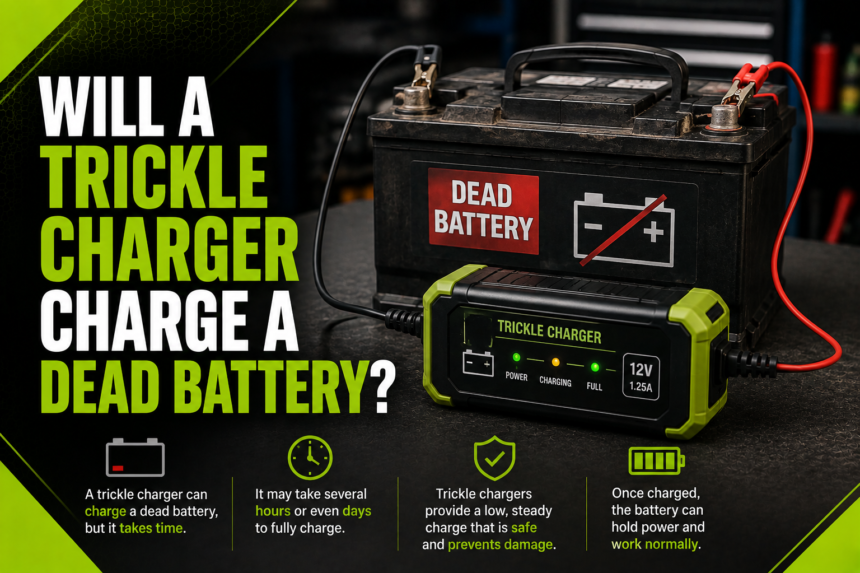
A trickle charger can charge a battery that is only partially discharged, but it usually struggles with a battery that is completely dead or deeply drained. These chargers send out a very small, slow, and steady stream of current, which works well for topping up a weak battery over time but is not powerful enough to quickly bring a fully flat battery back to life.
- What Is a Trickle Charger?
- What Does “Dead Battery” Actually Mean?
- Discharged vs Deeply Discharged Batteries
- Common Causes of a Dead Battery
- How to Check Battery Voltage
- Can a Trickle Charger Revive a Dead Battery?
- Mildly Discharged Battery vs Completely Flat Battery
- Why Trickle Chargers Struggle With Very Low Voltage Batteries
- Time Factor: How Long It Might Take
- Trickle Charger vs Regular or Smart Charger
- Risks of Using a Trickle Charger on a Dead Battery
- Step-by-Step: How to Properly Charge a Dead Battery
- Step 1: Test the Battery First
- Step 2: Choose the Right Charger
- Step 3: Connect Safely
- Step 4: Understand Charging Time Expectations
- Step 5: Recognize a Battery That Cannot Be Saved
- When You Should Not Use a Trickle Charger
- Tips to Maintain Battery Health
- Frequently Asked Questions
- How long does a trickle charger take to charge a dead battery?
- Can a trickle charger overcharge a battery?
- Is it safe to leave a trickle charger on overnight?
- What is the difference between a trickle charger and a battery maintainer?
- Conclusion
- Related Articles
Whether it works in your specific case depends on how low the battery voltage has actually dropped, how old the battery is, and how much time you are willing to give the charging process. In the sections below, every part of this question is explained in detail so you can make the right decision for your own battery.
What Is a Trickle Charger?
A trickle charger is a low-output charging device built to maintain battery health rather than perform fast charging. It sends a small amount of current continuously, which keeps a battery topped up without stressing it.
How Trickle Chargers Work
A trickle charger releases a slow, constant stream of electricity, usually measured in milliamps rather than full amps.
This gentle output is designed to replace the small amount of charge a battery naturally loses when it sits unused. Because the current is so low, the process is slow but generally safe for the battery’s internal cells over long periods.
What Trickle Chargers Are Designed For
These chargers are made mainly for maintenance charging, not for reviving a battery from zero. They are commonly used on vehicles, boats, or equipment that sit idle for weeks or months, keeping the battery from slowly draining away. Using them on a healthy but resting battery is exactly the situation they were built for.
What Does “Dead Battery” Actually Mean?
The term “dead battery” is often used loosely, but it can mean very different things depending on the actual voltage left inside.
Understanding this difference is the key to answering will a trickle charger charge a dead battery in your own situation.
Discharged vs Deeply Discharged Batteries
A discharged battery still holds some voltage and can often be revived fairly easily with almost any charger, including a trickle charger.
A deeply discharged or completely flat battery, on the other hand, has voltage so low that many chargers, including trickle units, may not even detect it as a valid battery to charge.
Common Causes of a Dead Battery
Batteries usually die due to leaving lights or accessories on, long periods of inactivity, old age reducing overall capacity, or extreme temperatures affecting chemical reactions inside the cells.
Identifying the cause helps determine whether the battery is simply drained or permanently damaged, which changes how you should approach charging it.
How to Check Battery Voltage
Before charging, use a multimeter to check the voltage across the terminals, since this number tells you exactly how depleted the battery is.
A reading above 12.4 volts on a standard car battery usually means a partial charge remains, while anything close to zero or under 10 volts suggests a deeply drained state that a trickle charger will likely struggle with.
Can a Trickle Charger Revive a Dead Battery?
In most cases, a trickle charger can slowly bring back a battery that still has some charge left, but it often cannot restore one that has dropped to near-zero voltage. This section breaks down exactly when it works and when it does not.
Mildly Discharged Battery vs Completely Flat Battery
If a battery is only mildly discharged, a trickle charger will usually charge it fully, just at a much slower pace than a standard charger.
However, a completely flat battery may not register enough voltage for the trickle charger’s internal sensor to start the charging cycle at all, leaving the battery untouched even while plugged in.
Why Trickle Chargers Struggle With Very Low Voltage Batteries
Many trickle chargers include safety circuits that only activate once a minimum voltage threshold is detected. When a battery falls below this threshold, the charger may read it as faulty or disconnected rather than simply empty, which prevents charging from beginning at all.
Time Factor: How Long It Might Take
Even in cases where charging does work, a trickle charger can take anywhere from several hours to multiple days to fully charge a deeply drained battery, since the current output is intentionally kept low. This slow pace is safer for the battery long-term but is not practical if you need the battery ready quickly.
Trickle Charger vs Regular or Smart Charger
Trickle chargers and regular chargers serve different purposes, and knowing the difference helps you pick the right tool for a dead battery. A regular or smart charger delivers much more power and is generally the better choice for a truly dead battery.
Key Differences Explained Simply
A trickle charger prioritizes slow, safe maintenance charging, while a regular charger focuses on restoring power quickly using higher current.
Smart chargers go a step further by automatically adjusting their output based on the battery’s condition, switching from a fast charge to a gentler maintenance mode as the battery fills up.
Comparison Table
| Feature | Trickle Charger | Regular Charger | Smart Charger |
| Charging Speed | Very slow | Fast | Adjustable/Fast |
| Best Use Case | Maintenance, storage | Reviving dead batteries | Both charging and maintenance |
| Risk of Overcharging | Low | Moderate if left too long | Very low, auto-adjusts |
| Ideal For | Long-term parked vehicles | Emergency dead battery situations | Everyday and long-term use |
When to Use Each Type
Use a trickle charger for a vehicle or device that will sit unused for weeks, since it keeps the battery healthy without any risk of overcharging. Use a regular or smart charger when the battery is already dead and you need it functional again within a reasonable time frame.
Risks of Using a Trickle Charger on a Dead Battery
Leaving a trickle charger connected to a deeply dead battery for extended periods carries a few risks that are worth understanding before you begin. These risks are generally minor but should not be ignored.
Overcharging Risk
Older trickle chargers without automatic shut-off can continue sending current even after the battery is full, which may lead to overcharging over very long periods. This is less common with modern models that include built-in charge controllers.
Battery Damage or Reduced Lifespan
Attempting to force a deeply damaged or sulfated battery to charge, even slowly, can sometimes accelerate internal degradation rather than fix the problem. In such cases, the battery may accept a small charge temporarily but fail again shortly after.
Safety Concerns
Charging any battery, including with a trickle charger, should be done in a ventilated area away from open flames, since batteries can release small amounts of gas during charging. Following basic safety precautions reduces the chance of any accident during the process.
Step-by-Step: How to Properly Charge a Dead Battery
Following a clear process ensures you charge the battery safely and gives it the best possible chance of recovery. Each step below builds on the last to guide you from testing to full charging.
Step 1: Test the Battery First
Always check the voltage with a multimeter before connecting any charger, since this tells you whether a trickle charger is even a realistic option. This single step saves time and prevents unnecessary charging attempts on a battery that may already be beyond saving.
Step 2: Choose the Right Charger
Based on the voltage reading, decide between a trickle charger for a mildly discharged battery or a regular and smart charger for one that is completely flat. Choosing correctly from the start avoids wasted hours waiting on a charger that will never activate.
Step 3: Connect Safely
Attach the positive clamp to the positive terminal and the negative clamp to a grounded metal point away from the battery, following the polarity markings carefully. Working in a ventilated space and avoiding contact between the two clamps keeps the process safe throughout.
Step 4: Understand Charging Time Expectations
Depending on the charger type and battery condition, charging can take anywhere from a few hours to a couple of days, so patience is important. Checking the voltage periodically during this time helps track progress without needing to disconnect the charger repeatedly.
Step 5: Recognize a Battery That Cannot Be Saved
If the battery voltage refuses to rise even after an extended charging attempt, or if it drains again almost immediately after disconnecting the charger, the battery has likely reached the end of its usable life. At this point, replacement is usually the more practical and cost-effective solution.
When You Should Not Use a Trickle Charger
Certain battery conditions make trickle charging unsuitable or even risky, and recognizing these situations in advance can prevent wasted effort or damage.
Frozen Batteries
A battery that has frozen due to extreme cold should never be charged in that state, since the internal fluid can expand dangerously. It should be allowed to thaw in a safe, room-temperature environment before any charging is attempted.
Physically Damaged Batteries
Batteries with visible cracks, leaks, or swelling should not be charged with any device, including a trickle charger, due to the risk of leakage or rupture. These batteries should be disposed of properly rather than reused.
Very Old or Sulfated Batteries
Batteries that have sat dead for a very long time often develop sulfation, a chemical buildup on the plates that blocks normal charging. A standard trickle charger typically cannot reverse this condition, and specialized desulfation chargers or battery replacement become the more realistic options.
Tips to Maintain Battery Health
Preventing a battery from dying in the first place is far easier than trying to revive one afterward, and a few consistent habits make a noticeable difference over time.
Regular Maintenance Charging
Connecting a trickle charger periodically to vehicles or equipment that are not used often helps maintain a healthy voltage level and prevents deep discharge from happening in the first place.
Storage Tips
Storing batteries in a cool, dry place and disconnecting them from devices that draw small amounts of power when idle both help preserve their charge for longer periods.
Seasonal Care
Cold weather in particular accelerates battery drain, so checking voltage more frequently during winter months and using a trickle charger proactively can prevent an unexpected dead battery.
Frequently Asked Questions
How long does a trickle charger take to charge a dead battery?
It can take anywhere from several hours to a few days, depending on how depleted the battery was to begin with and the specific output of the charger.
Can a trickle charger overcharge a battery?
Older models without automatic shut-off can overcharge if left connected for too long, though most modern trickle chargers include protection against this.
Is it safe to leave a trickle charger on overnight?
Yes, in most cases, since trickle chargers are designed for slow, long-duration charging, though checking the battery periodically is still a good habit.
What is the difference between a trickle charger and a battery maintainer?
A battery maintainer is essentially a smarter version of a trickle charger that automatically regulates output to prevent overcharging, while basic trickle chargers may lack this automatic control.
Conclusion
So, will a trickle charger charge a dead battery? The honest answer is that it depends on how dead the battery really is. A mildly discharged battery will usually respond well, just slowly, while a deeply drained or sulfated battery often needs a stronger charger or outright replacement.
Testing the voltage first, choosing the right charger type, and following safe charging practices will give you the clearest path to getting your battery working again.
Related Articles
Are NAPA Batteries Good? Honest Review, Pros, Cons & Buying Guide
What Batteries Do Xbox Controllers Use? A Complete Guide
What Is the Reserve Capacity of a Car Battery? Complete Guide