



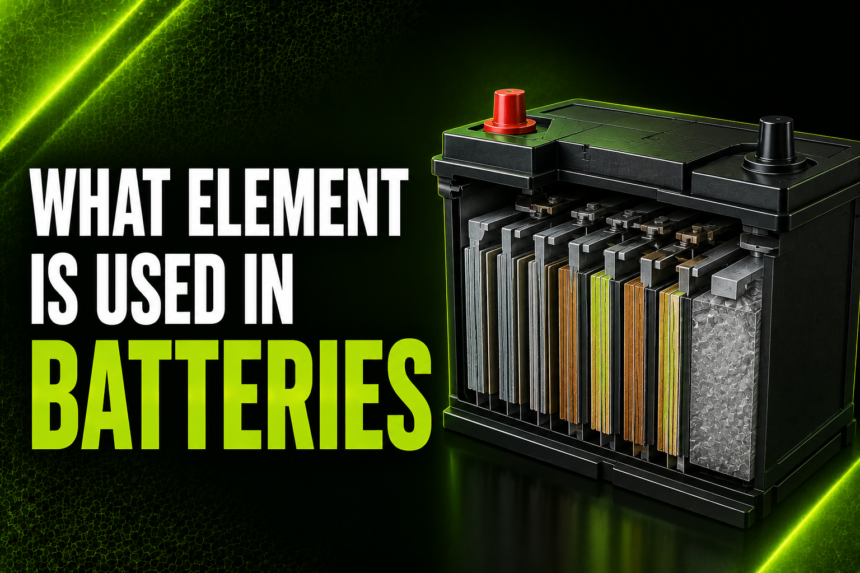
Batteries have become such a normal part of daily life that most people never stop to think about what’s actually happening inside them. Your phone, your car, your TV remote, and even your electric toothbrush all rely on tiny chemical reactions to produce power. But what element is used in batteries to make all of this possible? The truth is, there isn’t just one single answer. Different batteries are built using different elements, each chosen for specific reasons like cost, weight, safety, and how much energy they can store.
- A Quick Answer for Readers in a Hurry
- How Batteries Work: The Basics
- Lithium: The Most Common Battery Element
- Lead: The Backbone of Car Batteries
- Nickel: Found in Rechargeable Batteries
- Cadmium: Effective but Controversial
- Zinc: The Everyday Battery Element
- Supporting Elements: Cobalt and Manganese
- Graphite: The Often-Overlooked Anode Material
- Emerging Elements and the Future of Battery Technology
- Comparison Table: Battery Elements at a Glance
- Environmental and Recycling Considerations
- Conclusion
- Frequently Asked Questions
- Related Articles
In this guide, we’ll walk through the most common elements used in batteries today, explain how they work in simple terms, and look at what the future of battery technology might hold.
A Quick Answer for Readers in a Hurry
If you’re just looking for a fast answer, here it is: the element most commonly used in modern batteries is lithium. It powers everything from smartphones to electric vehicles because it’s lightweight and can store a large amount of energy. That said, other elements such as lead, nickel, cadmium, and zinc are also widely used depending on the type of battery and its intended purpose.
Now let’s dig deeper into how this all works.
How Batteries Work: The Basics
Before jumping into specific elements, it helps to understand how a battery actually produces electricity. Every battery has three main parts: an anode (negative side), a cathode (positive side), and an electrolyte (the substance that allows charged particles to move between them). When a battery is connected to a device, a chemical reaction occurs between the anode and cathode. This reaction pushes electrons through an external circuit, which is what we experience as electrical power.
The elements chosen for the anode, cathode, and electrolyte determine how efficient, safe, and long-lasting a battery will be. This is exactly why manufacturers spend so much time researching and testing different materials.
Lithium: The Most Common Battery Element
When people ask what element is used in batteries, lithium is usually the first and most accurate answer for modern technology. Lithium-ion batteries are found in smartphones, laptops, tablets, power banks, and increasingly in electric vehicles.

Lithium is popular for a few key reasons. First, it’s the lightest metal on the periodic table, which makes it ideal for portable electronics where weight matters. Second, it has a high energy density, meaning it can store a large amount of power in a small space. Third, lithium batteries can be recharged hundreds or even thousands of times before their performance noticeably drops.
There are two main types of lithium batteries worth knowing about:
- Lithium-ion (Li-ion): The most widely used type, found in almost all consumer electronics and electric cars.
- Lithium-polymer (Li-po): A more flexible version often used in drones, wearables, and slim devices where battery shape matters.
Lead: The Backbone of Car Batteries
Long before lithium became popular, lead was already powering vehicles through lead-acid batteries. If you’ve ever had to jump-start a car, you’ve dealt with a lead-acid battery. These batteries are still widely used today because they’re inexpensive to produce and highly reliable for starting internal combustion engines.
The downside is that lead is heavy, which limits its usefulness in portable electronics. It’s also toxic, so proper recycling is essential to prevent environmental harm. Despite these drawbacks, lead-acid batteries remain a practical, affordable choice for automotive and backup power systems.
Nickel: Found in Rechargeable Batteries
Nickel is another element that plays a major role in battery technology, particularly in two types of rechargeable batteries: Nickel-Metal Hydride (NiMH) and Nickel-Cadmium (NiCd).
NiMH batteries were once extremely popular in hybrid vehicles and household rechargeable batteries, such as those used in cameras and remote controls. They offer a good balance between cost and performance, though they’ve gradually been replaced by lithium-ion in many applications due to lithium’s superior energy density.
Cadmium: Effective but Controversial
Cadmium is the “Cd” in NiCd batteries, and while these batteries were once common in power tools and emergency lighting, cadmium has fallen out of favor. The reason is simple: cadmium is highly toxic to both humans and the environment. Many countries have restricted or banned its use in consumer products, pushing manufacturers toward safer alternatives like NiMH and lithium-based batteries.
Zinc: The Everyday Battery Element
If you’ve ever bought a pack of AA or AAA batteries for a TV remote or a flashlight, you’ve likely used a battery containing zinc. Zinc is a key element in both zinc-carbon and alkaline batteries, which are the standard disposable batteries found in almost every household.
Zinc batteries are inexpensive and reliable for low-drain devices, but they don’t perform as well in high-drain electronics like digital cameras or gaming controllers. That’s part of the reason rechargeable lithium or NiMH batteries have become more popular for those specific uses.
Supporting Elements: Cobalt and Manganese
While lithium gets most of the attention, it doesn’t work alone. Lithium-ion batteries often rely on cobalt and manganese to help stabilize the battery’s cathode and improve overall performance.
Cobalt, in particular, helps increase energy density and extends the lifespan of the battery. However, cobalt mining has raised serious ethical concerns, as much of the world’s supply comes from regions with reported unsafe labor practices. This has pushed researchers to develop cobalt-free or low-cobalt battery formulas.
Graphite: The Often-Overlooked Anode Material
While the cathode side of a lithium battery gets a lot of attention, the anode is just as important. Most lithium-ion batteries use graphite, a form of carbon, as the anode material. Graphite is valued because it can safely store lithium ions during charging and release them during use, all while remaining structurally stable over thousands of charge cycles.
Emerging Elements and the Future of Battery Technology
As demand for batteries grows, especially for electric vehicles and renewable energy storage, researchers are exploring alternatives to reduce dependency on lithium and cobalt. A few promising developments include:
- Sodium-ion batteries: Sodium is far more abundant and cheaper than lithium, making it an attractive option for large-scale energy storage.
- Solid-state batteries: These replace liquid electrolytes with solid materials, potentially improving safety and energy density.
- Silicon anodes: Silicon can store significantly more lithium ions than graphite, which could lead to batteries with much longer life.
These innovations could reshape the battery industry in the coming years, offering safer, cheaper, and more sustainable options.
Comparison Table: Battery Elements at a Glance
| Element | Battery Type | Common Use | Pros | Cons |
|---|---|---|---|---|
| Lithium | Li-ion, Li-po | Phones, laptops, EVs | Lightweight, high energy density, long life | Higher cost, fire risk if damaged |
| Lead | Lead-acid | Car batteries, backup power | Cheap, reliable | Heavy, toxic |
| Nickel | NiMH | Hybrid cars, household electronics | Decent performance, safer than NiCd | Lower energy density than lithium |
| Cadmium | NiCd | Power tools, emergency lighting | Durable, performs well in cold | Highly toxic, being phased out |
| Zinc | Alkaline, zinc-carbon | AA/AAA disposable batteries | Very cheap, widely available | Not ideal for high-drain devices |
| Cobalt | Li-ion (cathode) | Supports lithium batteries | Boosts energy density and lifespan | Ethical mining concerns |
Environmental and Recycling Considerations
Not all battery elements are equally easy on the environment. Lead and cadmium, for example, are toxic and require careful disposal to avoid contaminating soil and water supplies. Lithium batteries, while generally safer, still need specialized recycling processes to recover valuable materials like cobalt and lithium itself, rather than letting them end up in landfills.
As battery usage continues to grow worldwide, recycling programs and stricter regulations are becoming more important. Many manufacturers are now investing in battery recycling technology to reduce the environmental footprint of these essential devices.
Conclusion
So, what element is used in batteries? As we’ve seen, the answer depends heavily on the type of battery in question. Lithium dominates modern portable electronics and electric vehicles thanks to its lightweight and high-energy properties, while lead remains the go-to choice for car batteries. Nickel, cadmium, and zinc each serve their own specific purposes, from power tools to everyday household electronics.
As technology continues to evolve, we may see a shift toward more sustainable elements like sodium, along with safer solid-state designs. Understanding these materials not only satisfies curiosity but also helps consumers make more informed choices about the devices they use every day.
Frequently Asked Questions
Is lithium dangerous? Lithium itself is not inherently dangerous in normal use, but lithium-ion batteries can pose a fire risk if they are damaged, overcharged, or exposed to extreme heat. Proper handling and quality manufacturing significantly reduce these risks.
What element is in a car battery? Most traditional car batteries use lead-acid technology, though electric vehicles typically use lithium-ion batteries instead.
Can batteries be made without rare or toxic metals? Yes, researchers are actively developing alternatives like sodium-ion batteries, which use more abundant materials and avoid some of the ethical and environmental concerns tied to cobalt and lithium mining.
Why do different batteries use different elements? Each element offers a different balance of cost, weight, safety, and energy storage capacity, so manufacturers choose the element that best fits the specific needs of a device.
Related Articles
How Long to Charge a Car Battery? Times by Charger Size
How Long Do Golf Cart Batteries Last?
Do Hazard Lights Drain Battery? The Complete Guide
Can a Battery Be Too Dead to Jump? When a Jump Works and When It Won’t